
Trade first, tension next:
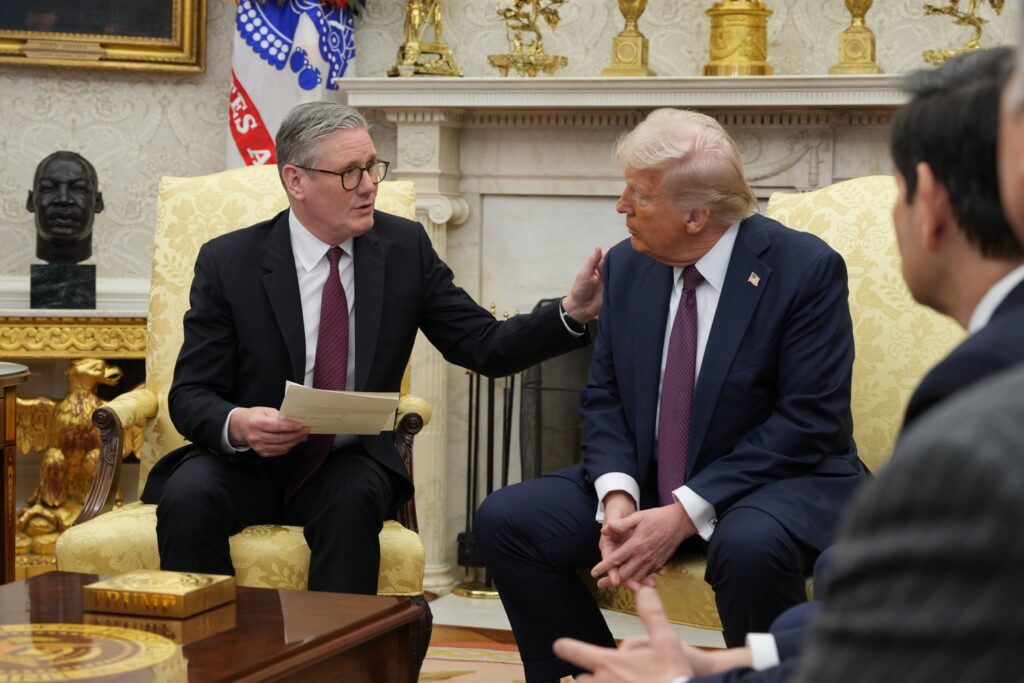
At the G7 summit in Kananaskis on 16 June 2025, President Trump and Prime Minister Starmer celebrated signing a US–UK trade deal—slashing tariffs on cars and aerospace—although Trump infamously dropped the paperwork in the wind and even miscalled it an “EU agreement.”
Starmer swooped in to grab the sheets, quipping it was a “very important document” . Despite the gaffe, Trump hailed it as “done” and a sign of “real strength,” while Starmer seized the moment to reinforce the UK’s diplomatic credibility .
Background banter:
Earlier this year, Starmer and Trump met in February to discuss Ukraine, finding common ground—Trump even praised Starmer’s negotiating style, though no military guarantees materialized .
Did Trump Listen on De-Escalation in the Middle East?
Starmer’s plea:
Throughout the G7 dinner, Starmer emphasised de‑escalation across the Middle East, referencing the collective G7 communique urging restraint, including a Gaza ceasefire .
He later told reporters that Trump gave no indication of planning US intervention—on the contrary, “the wording of the G7 statement is very clear about de‑escalation” .
Trump’s tone: mixed signals:
Later that night on Truth Social, Trump called Iran’s Supreme Leader “an easy target” and said the US “won’t kill him … at least not for now,” while warning Iran that its “unconditional surrender” was expected .
He asserted full air‑control and demanded Iran “make a deal now or face more brutal action

So – did he listen?
Starmer walked away saying Trump didn’t signal military plans at G7, and indeed the joint communique stressed de‑escalation—an agreement Starmer believes Trump bought into, at least publicly . But Trump’s immediate post‑summit rhetoric contradicted that message, swinging between restraint (“not for now”) and aggressive posture (“unconditional surrender”).
—
✅ Verdict
1. Meeting tone: Warm, cordial, heavy on optics—trade deal, banter, mutual compliments—even amid a dramatic paper drop.
2. Starmer’s push: He clearly and repeatedly pressed for de‑escalation, and got Trump’s verbal assent to the G7 wording on reducing hostilities.
3. Trump’s reaction: He publicly acknowledged the G7 de‑escalation message, but swiftly followed with hawkish statements that dilute any diplomatic gains.


