
In an age where reality feels more like a negotiated consensus than an objective truth, Adam Curtis returns with Shifty, a bold five-part documentary series that delivers a uniquely British post-mortem on society’s gradual unravelling.
Curtis, the ever-polarising documentary-maker, again deploys his signature arsenal: a swirling collage of archive newsreels, forgotten vox pops, home video, glitzy pop culture snippets, and political exposés—all underscored by a pulsating, ironic soundtrack. The effect is dizzying and deliberately so. This is not a guided tour. It’s a mirror maze with the nation’s psyche at its core.
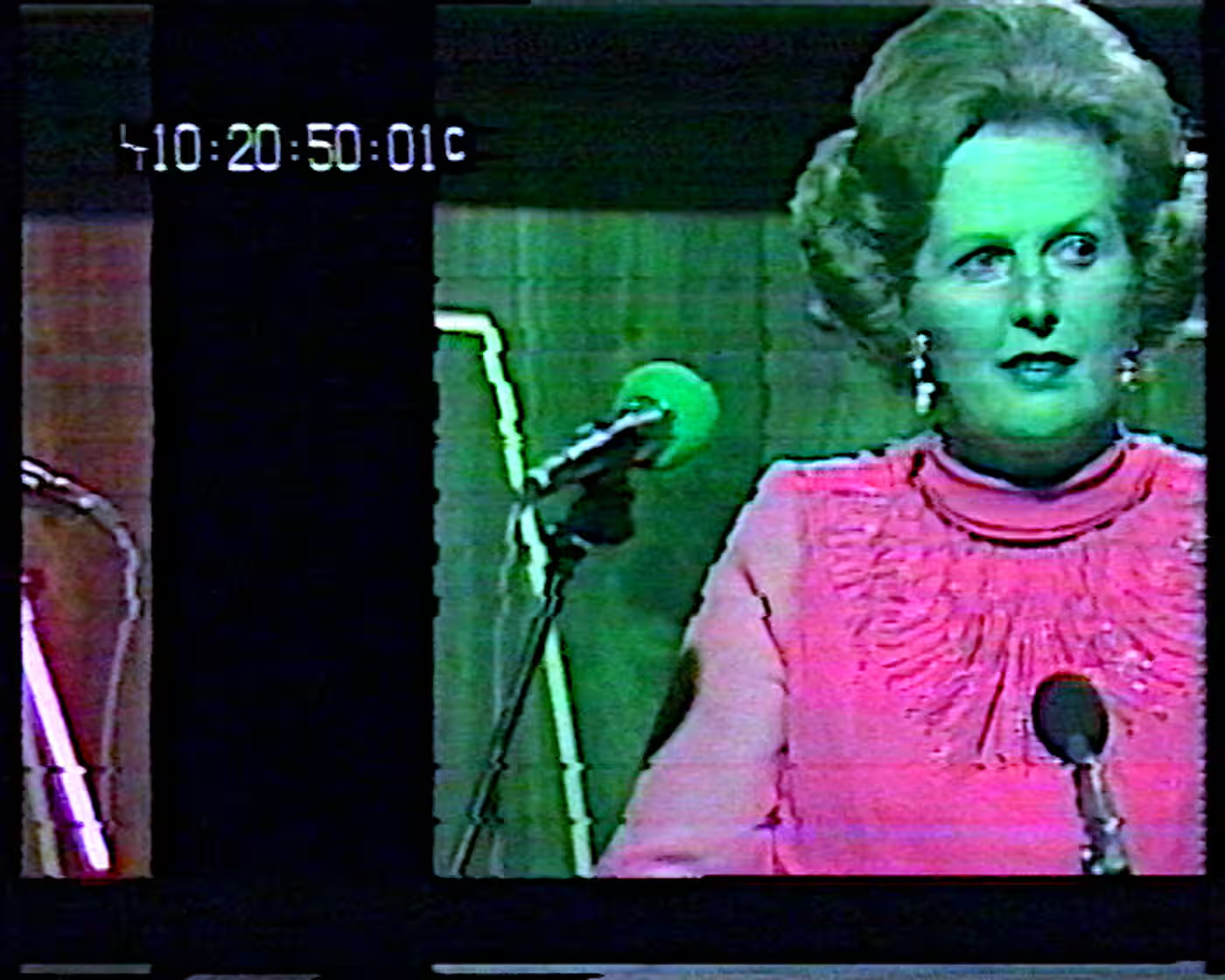
From the opening scene—Margaret Thatcher welcoming a group of children into her study, escorted by none other than Jimmy Savile—Curtis signals his intent. The past is not just prologue; it’s the foundation upon which all our current uncertainties rest.
Shifty traces Britain’s transformation from the certainties of post-war settlement to the atomised present, where even the idea of shared truth seems quaint. Thatcher’s war on collective society, the Falklands, the Troubles, the miners’ strike, the rise of consumerism, CCTV, and house-as-asset culture are all examined—not linearly, but impressionistically. The viewer is invited not to follow a path but to feel a trajectory: from coherence to chaos, from trust to suspicion, from community to consumer.
The series does not flinch. Curtis’s lens captures how art was commodified into “diffusion lines,” how truth was untethered from reality, and how national myths once rooted in empire were repackaged or rejected in the face of media saturation and late capitalist detachment.
By the time we arrive at New Labour, hope feels faint and ironic. Any notion of restoring a politics rooted in the common good is dismissed with a mordant grin. Blairism, Curtis argues, absorbed the cynicism it sought to replace. Curtis presents a clip of Gordon Brown’s earnest optimism flickering out at a party conference not as a meme, but as a requiem.

Importantly, Shifty stops before the Brexit vote and the rise of Donald Trump—but the groundwork is laid. The descent, in Curtis’s telling, was not sudden. It was slow, cultural, and psychological—a drift abetted by a public numbed to truth and a politics consumed by image.
Whether the viewer agrees with this narrative depends largely on where they stand already. Curtis remains a “Marmite” figure: loved or loathed, rarely in between. His design doesn’t rely on hard data to persuade, but rather on patterns to captivate. If you’re already inclined to believe the wheels came off long ago, Shifty will feel revelatory. If not, it may feel like another stylish lament for a country that never quite was.
That said, few filmmakers today dare to present a fully formed thesis—let alone one executed with flair, intelligence, and unapologetic vision. For that alone, Shifty demands attention.
The series might not offer comfort. But in a media landscape of hot takes and algorithmic sludge, standing in the presence of an idea—any idea—feels oddly exhilarating.


