
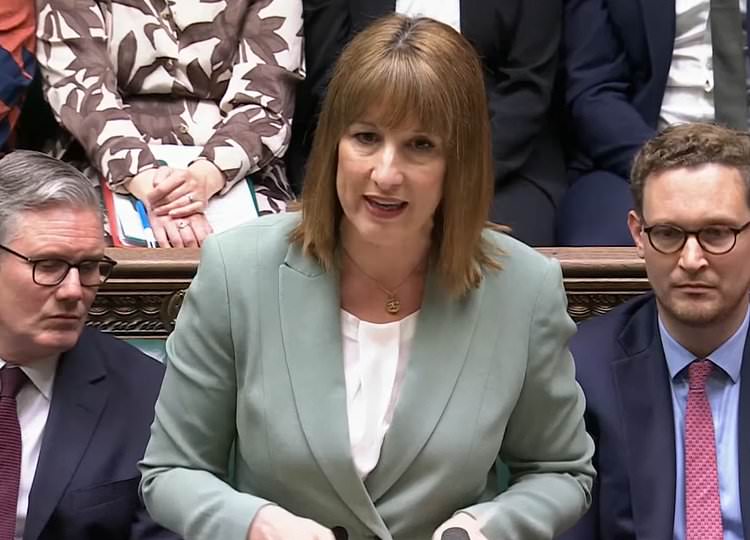
Chancellor Rachel Reeves has announced the UK government’s multi-year Spending Review, outlining how £600 billion will be allocated across departments.
The review focuses on economic renewal, public services, and infrastructure investment.
Experts warn that tight fiscal constraints may lead to future tax increases.
Key Spending Allocations
Healthcare & Public Services
NHS: £30 billion increase in funding to reduce waiting lists and improve services.
Schools: An additional £4.5 billion allocated for education by 2028-29.
Social & Affordable Housing: £39 billion investment over the next decade to build 1.5 million new homes.
Defence & Security
Defence Spending: Set to rise to 2.6% of GDP by 2027, including a £600 million boost for security and intelligence agencies.
Border Security: £280 million per year allocated to tackle illegal immigration and end the use of hotels for asylum seekers.
Infrastructure & Transport
Public Transport: £15.6 billion for city-region projects in England.
Northern Powerhouse Rail: £3.5 billion pledged for upgrades.
London Transport: A four-year settlement for Transport for London.
Energy & Technology
Nuclear Power: £16.7 billion investment, including £14.2 billion for the Sizewell C plant.
AI Research: £2 billion for the UK’s AI Action Plan.
Supercomputing: £750 million for the UK’s most powerful supercomputer in Edinburgh.
Government’s Vision
Reeves emphasized that the Spending Review is part of the Plan for Change, aiming to make working people “better off”.
Prime Minister Keir Starmer described the review as a shift to a new phase of governance focused on economic renewal.
Challenges & Expert Warnings
The Institute for Fiscal Studies cautioned that tight fiscal rules leave little room for error, potentially leading to tax hikes in the autumn budget.
Critics argue that while investment is substantial, some departments may face budget squeezes.
Conclusion
The Spending Review sets ambitious goals for infrastructure, public services, and economic growth.
The government will release further details in the coming months, including plans for Northern Powerhouse Rail and AI expansion.
This outline provides a structured overview of the Spending Review while maintaining a journalistic tone. Let me know if you’d like any refinements.

The budget in more detail, key Spending Review areas:
The UK government has announced plans to increase defence spending to 2.6% of GDP from 2027, with an ambition to reach 3% in the next Parliament. The Strategic Defence Review (SR) confirms these plans and sets out further investment in intelligence agencies. The government’s plans aim to reduce irregular migration, the flow of illicit commodities, and safeguard victims of trafficking and smuggling. Phase 1 provides initial funding for a Border Security Command to tackle criminal gangs, while Phase 2 provides up to £280 million additional RDEL in 2028-29 for the Border Security Command.
Energy security is central to the government’s national security plans, with the SR ending decades of delay on critical energy projects by giving the green light to Sizewell C, a Small Modular Reactor, and Carbon Capture, Usage and Storage programmes. The government is also providing a £29 billion real terms increase in annual NHS day-to-day spending from 2023-24 to 2028-29, equivalent to a 3.0% average annual real terms growth rate over the SR period. The SR also announces a £2.3 billion real terms increase in DHSC’s annual capital budgets from 2023-24 to 2029-30 to invest in the NHS, including in new technology, hospitals, and primary care.
The government is taking action to return local government to a sustainable financial position, providing an additional £3.4 billion of grant funding in 2028-29.
The school’s budget will grow by £2 billion in real terms, ensuring an average real terms growth of 1.1% per pupil.
The government’s Plan for Change aims to increase police spending power by an average 2.3% per year over the SR period, supporting frontline policing levels across England and Wales and restoring public confidence in policing.
The plan also includes reforms to key public services, such as improving productivity and reducing bureaucracy in the NHS, promoting earlier intervention in children’s social care, and delivering transformative reforms to sentencing.
The devolved governments will receive an additional £4.8 billion per year for day-to-day spending between 2026-27 and 2028-29 and £930 million capital between 2026-27 and 2029-30 through the operation of the Barnett formula.
This includes £2.4 billion resource and £510 million capital for the Scottish Government, £1.4 billion resource and £200 million capital for the Welsh Government, and £1 billion resource and £220 million capital for the Northern Ireland Executive.
The government increased the capital envelope by over £100 billion at Autumn Budget 2024 and £13 billion over the same period at Spring Statement 2025, investing an additional £120 billion over the SR period compared with the plans set out at Spring Budget 2024.
The government is providing substantial new capital investment to ensure growth is felt across the country, including £15.6 billion in total by 2031-32 through the new Transport for City Regions (TCR) settlements, £39 billion for a new 10-year Affordable Homes Programme, £14.2 billion for Sizewell C, and £22.6 billion per year for research and development by 2029-30.
To ensure the benefits of this funding are felt across all nations and regions of the United Kingdom, the government is devolving power and decision-making from Whitehall to local leaders, investing directly in local communities, and reforming the Green Book to provide objective, transparent advice on public investment.


