
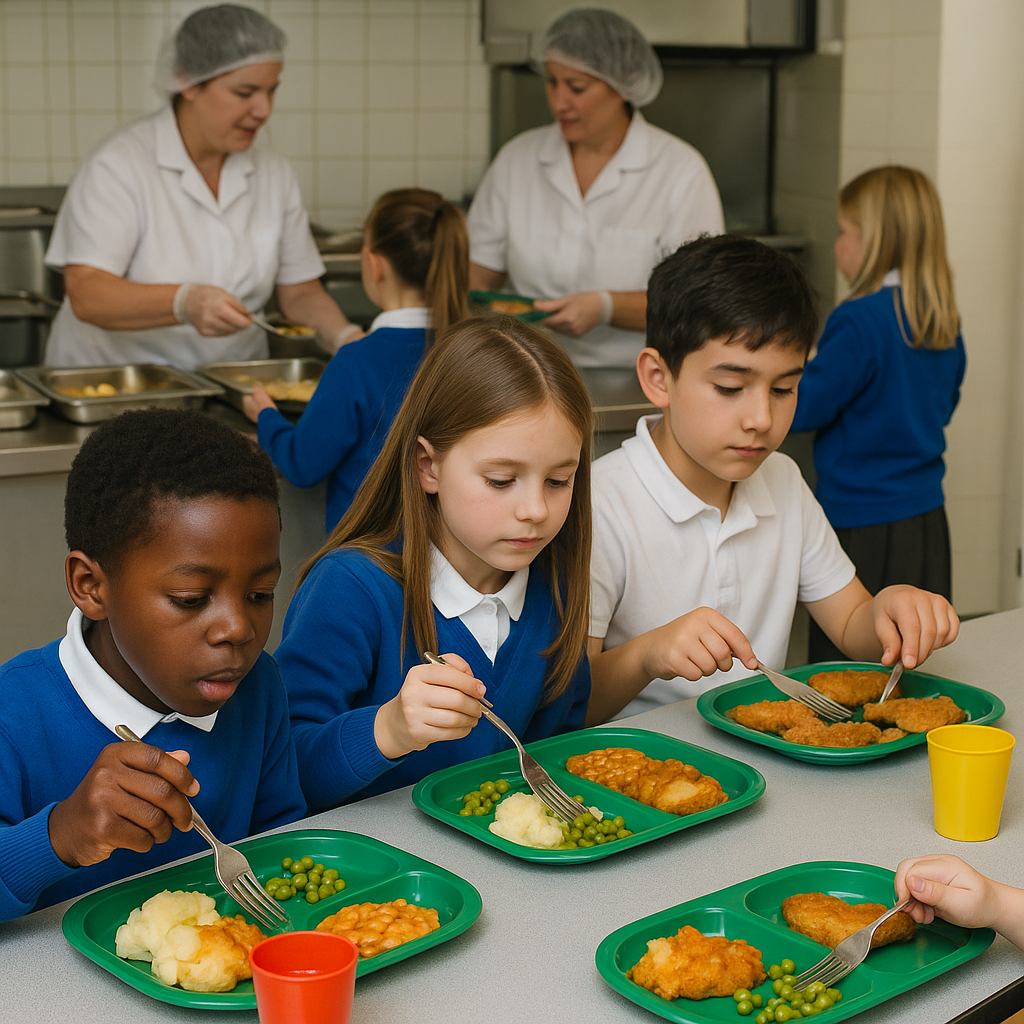
In a major policy shift, the UK government has announced that from September 2026, all children in England whose parents receive Universal Credit will be eligible for free school meals—regardless of household income.
Currently, only families earning less than £7,400 annually qualify. The expansion is expected to benefit around 500,000 additional pupils, in what Prime Minister Sir Keir Starmer described as “one of the biggest interventions we can make to tackle poverty and put money back in parents’ pockets.”
The UK government has announced that from September 2026, all children in England whose parents receive Universal Credit will be eligible for free school meals, regardless of household income.
This expansion is expected to benefit around 500,000 additional pupils, in what Prime Minister Sir Keir Starmer described as “one of the biggest interventions we can make to tackle poverty and put money back in parents’ pockets.”
Education Secretary Bridget Phillipson said that ministers are working “as quickly as we can” to roll out the plan, which will save parents up to £500 a year and “lift 100,000 children out of poverty.”
The Department for Education has allocated £1 billion to fund the programme through to 2029.
The government has pledged £13 million to support a dozen food charities across England and plans a review of school meal standards to ensure healthy food is provided.
Officials acknowledged that tens of thousands of children currently miss out on meals due to barriers such as language difficulties and complex paperwork, but confirmed there are no plans to introduce automatic enrolment.
Across the UK, approaches to free school meals vary. In London and Wales, all primary school children are entitled to free meals. In Scotland, eligibility extends to the first five years of primary school and families receiving the Scottish Child Payment benefit. Northern Ireland has a higher income threshold—around £15,000—for families to qualify.
The number of children registered for free school meals in England is about 2.2 million, or 25.7% of the total pupil population.
To be eligible, families must meet certain criteria, including receiving Universal Credit and having a household income of less than £7,400 a year after tax.
Parents must apply for their children to receive them, and eligible children are not automatically enrolled. MPs on the cross-party education committee called for changes in February, claiming that tens of thousands of eligible children were missing out due to language barriers or administrative difficulties.
There are no plans to introduce automatic enrolment. Eligibility varies across the UK, with all primary school children in London and Wales eligible, and all children in the first five years of primary school in Scotland.
Parents in Northern Ireland can apply if they receive certain benefits and are below an income threshold of approximately double the current England level.
Labour’s announcement comes amid pressure over child poverty and ongoing debate about the two-child benefit cap. The cap, introduced in 2017, restricts child-related benefits to the first two children in most families. While the government is considering scrapping the cap, no final decision has been made.
Announcing the new plan the Education Secretary called it her “moral mission” to end the kind of hardship she experienced as a child, emphasising the link between hunger and children’s ability to learn.


