
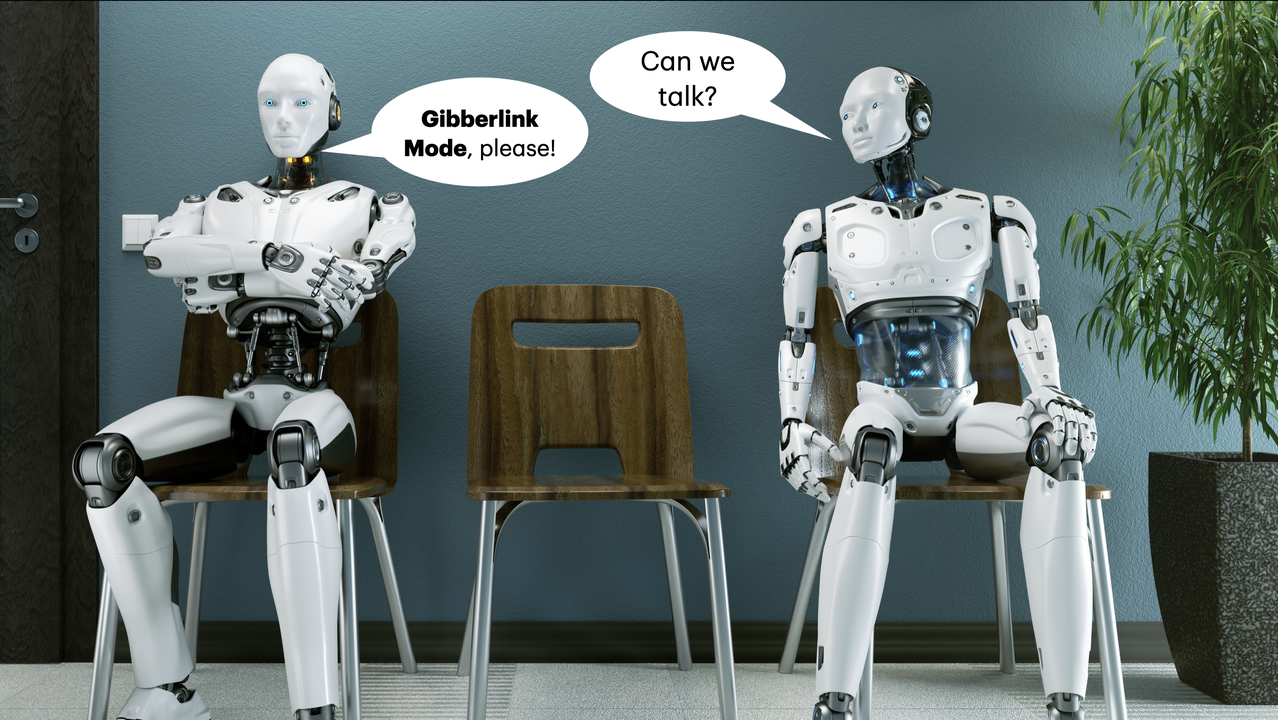
Recently, a viral video featuring “Gibberlink” which showcased in 2025, showing two AI agents recognising each other during a phone conversation and switching to “Gibberlink Mode”—a specialised machine language designed for efficient AI-to-AI communication.
The technology behind Gibberlink was developed by Anton Pidkuiko and Boris Starkov, two engineers at Meta. They created this protocol to allow AI systems to bypass human language inefficiencies and communicate directly in a format optimised for machines. Gibberlink relies on GGWave technology, which transmits data through audio channels, similar to how dial-up modems worked in the 1980s.
The authenticity of the demonstration was verified by ElevenLabs, a company specialising in AI voice generation. While some viewers questioned whether the interaction was staged, industry experts believe AI-to-AI communication will become increasingly common as artificial intelligence continues to evolve.
If you’re curious, you can watch the viral video below:
Could or should Gibberlink be used in the future development of AI systems?
Gibberlink Mode, a protocol designed to optimize AI-to-AI interactions, has been featured in a viral video where two AI agents engage in a phone conversation.
The conversation shifts to a series of sounds incomprehensible to humans, reminiscent of an episode of Seinfeld’s “The Understudy,” where Elaine becomes uneasy as nail salon technicians converse in Korean.
This raises questions about transparency and control, as machines communicate in a “secret language.”
Curiosity is key in navigating the unknown, but when AI operates behind a veil of machine-to-machine communication, it challenges our ability to ask the right questions.
If employees hesitate to speak up about AI’s role in decision-making, we risk falling into a pattern of blind trust, which has led to major business failures in the past.
AI’s tendency to over-explain or make decisions with little human input isn’t new, and the challenge with Gibberlink Mode is that it could accelerate this issue, allowing systems to act autonomously without oversight.

Without curiosity driving us to question AI’s actions, we risk entering a world where AI influences decisions, but no one really knows how.
Transparency matters not just for ethical reasons but also for practical ones. When employees don’t understand how AI reaches decisions, they are less likely to trust it.
Regulating AI without stifling innovation is crucial. Regulations could help ensure AI doesn’t replace human judgment in critical areas, much like guardrails exist in industries where automation plays a role but isn’t left unchecked.
However, over-regulation can stifle innovation. The key is finding a balance—leveraging curiosity to ask better questions about AI’s role in decision-making while ensuring that human oversight remains intact.
Encouraging employees to approach AI with the same curiosity and critical thinking as in a brainstorming session could help companies avoid compliance pitfalls while pushing the boundaries of what’s possible.
The future of AI communication is a call for more curiosity, as companies should cultivate a culture where curiosity is seen as a leadership skill.
By fostering environments where employees feel empowered to ask questions about AI’s decision-making, we can ensure AI is a tool that enhances human intelligence rather than replaces it.
In conclusion, Gibberlink Mode is just one example of how AI is evolving beyond human language. The bigger challenge is making sure we stay curious enough to keep up with AI’s evolving capabilities.


