
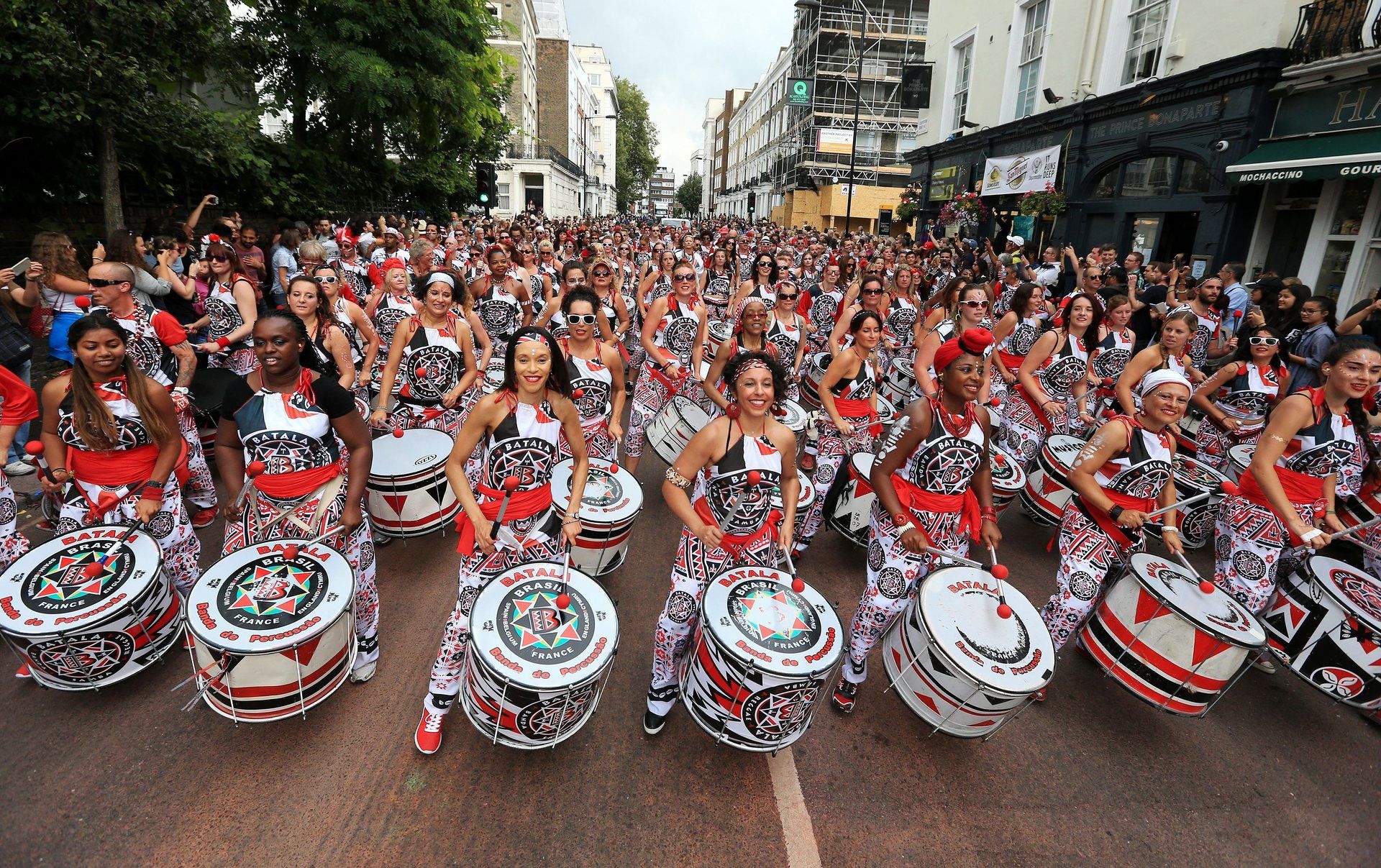
The Notting Hill Carnival is a vibrant celebration of Caribbean culture held annually in Notting Hill, London. Here’s a look at its history:
**Early Days (1960s):**
* **Origins in Trinidad:** The carnival’s roots lie in the Trinidadian tradition of “Canboulay,” a street festival with roots in African and indigenous cultures.
* **Migration and community:** In the 1950s, many Caribbean immigrants arrived in London, settling in areas like Notting Hill. The carnival emerged as a way for them to celebrate their heritage and build community.
* **1964:** The first Notting Hill Carnival was held on August 30th, 1964, organized by Rhaune Laslett, a local community worker. It started as a small, informal gathering in the streets.

**Growth and Evolution (1970s-1990s):**
* **Increasing scale and popularity:** The carnival grew rapidly in size and popularity, becoming one of the largest street festivals in Europe.
* **Music and sound systems:** Sound systems, playing reggae, calypso, and other Caribbean music, became a prominent feature of the carnival.
* **Masquerade and costumes:** Elaborate costumes and masquerades, like the iconic “Queen of Carnival,” became central to the event.
* **Social and political significance:** The carnival also became a platform for raising awareness of social issues affecting the Black community in Britain.
**The Carnival Today:**
* **Two days of celebration:** The carnival is now a two-day event, held on the last weekend of August.
* **Multiple stages and activities:** It features multiple stages with live music, sound systems, food stalls, and craft markets.
* **International appeal:** The Notting Hill Carnival attracts visitors from all over the world, celebrating diversity and cultural exchange.

**Key Figures:**
* **Rhaune Laslett:** The founder of the carnival.
* **Claudia Jones:** A prominent activist and journalist who played a role in promoting Caribbean culture in Britain.
* **Lord Kitchener:** A Trinidadian calypso singer who performed at early carnivals and contributed to its musical identity.
**The Notting Hill Carnival continues to be a testament to the resilience, creativity, and cultural richness of the Caribbean diaspora in London.** It remains a highlight of the city’s cultural calendar and a celebration of community, music, and heritage.


