
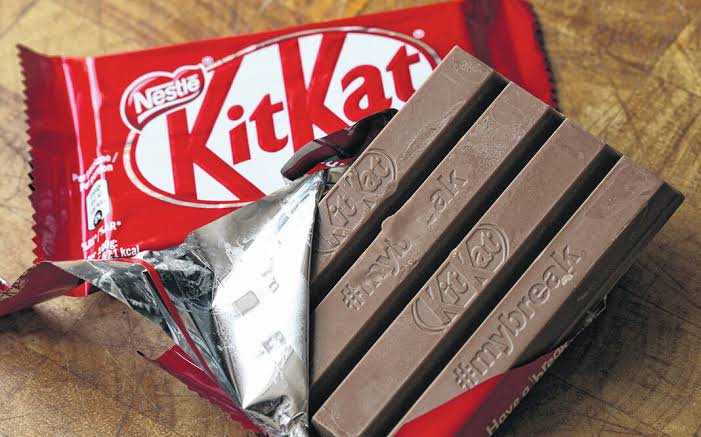
Britain’s Chocolate Bars Caught in a Global Crime Web. KitKat launches stolen chocolate tracker after thieves stole 12 tons of the popular confectionery
A chocolate bar is meant to be a simple pleasure, a small ritual of comfort where you snap, share, and savour without a second thought.
Yet across Britain and parts of Europe, that familiar routine has taken on an unexpected edge, as shoppers now find themselves asking a question that feels almost absurd: is your KitKat stolen?

What sounds like a throwaway joke has, in recent days, hardened into a genuine curiosity, driven by an unfolding story that blends organised crime with everyday consumer life.
The saga began with the disappearance of a lorry carrying approximately 12 tonnes of KitKat chocolate bars as it travelled between Italy and Poland.
Inside the vehicle was a remarkable cargo of around 413,000 bars, many of them limited-edition varieties linked to Formula 1 branding, making the loss not only financially significant but also culturally peculiar.
The truck never reached its destination, and neither did the chocolate, prompting suspicions that the theft was part of a wider pattern of organised cargo crime that has been quietly increasing across European transport routes.

Rather than quietly absorbing the loss, Nestlé, the company behind KitKat, has responded in a way that is both practical and unexpectedly theatrical.
It has introduced a public-facing “stolen KitKat tracker,” allowing consumers to enter batch or serial numbers printed on their chocolate packaging to determine whether their bar may have originated from the missing shipment.
The result is a curious blend of consumer engagement and investigative effort, where a simple snack becomes a potential clue in a wider criminal puzzle, and shoppers are transformed into participants in tracing the movement of stolen goods.
The tracker delivers a straightforward verdict, informing users whether their product is linked to the stolen batch or not, and in cases where there may be a connection, encourages reporting to help build a clearer picture of where the chocolate has ended up.
What could have remained a quiet logistical loss has instead evolved into a public-facing campaign, one that doubles as both damage control and a striking example of modern brand storytelling in the age of viral curiosity.
The choice of chocolate as a target may seem whimsical at first glance, but the reasoning behind it is anything but.
Confectionery is easy to transport in large quantities, difficult to trace once removed from its original packaging, and perpetually in demand, particularly in the lead-up to seasonal peaks such as Easter.
This combination makes it an ideal commodity for resale through informal or grey-market channels, allowing stolen goods to quickly dissolve into legitimate supply chains before authorities can intervene.
This is not the first time sweet goods have found themselves at the centre of criminal activity. In 2023, a large-scale theft involving approximately 200,000 Cadbury Creme Eggs captured headlines across the UK, highlighting just how attractive seasonal confectionery can be to opportunistic thieves.
While that incident carried a certain comic absurdity, it also underscored a broader reality: high-volume, fast-moving consumer goods are increasingly viewed as low-risk, high-reward targets.
Back in Britain, the current KitKat story has taken on a life of its own, with consumers examining packaging more closely than ever before and social media amplifying the intrigue. What was once a casual purchase has become a moment of mild investigation, as people check batch codes and share their findings, half in jest and half in genuine curiosity.
The idea that a chocolate bar might carry a hidden backstory has proven surprisingly compelling, adding a layer of narrative to an otherwise ordinary product.
Nestlé has reassured the public that there is no safety concern associated with the stolen chocolate and that overall supply levels remain stable, meaning there is no practical risk to consumers beyond the novelty of the situation.
The real impact lies less in disruption and more in perception, as a routine item of everyday life briefly becomes something more unusual, even cinematic in its journey from factory to shelf.
In the end, the story of the stolen KitKats is less about loss and more about transformation. A product designed for a fleeting moment of enjoyment has become part of a wider narrative involving crime, technology, and public participation.
It serves as a reminder that even the most ordinary objects can carry extraordinary stories, and that sometimes, the smallest indulgences come with the most unexpected twists.


