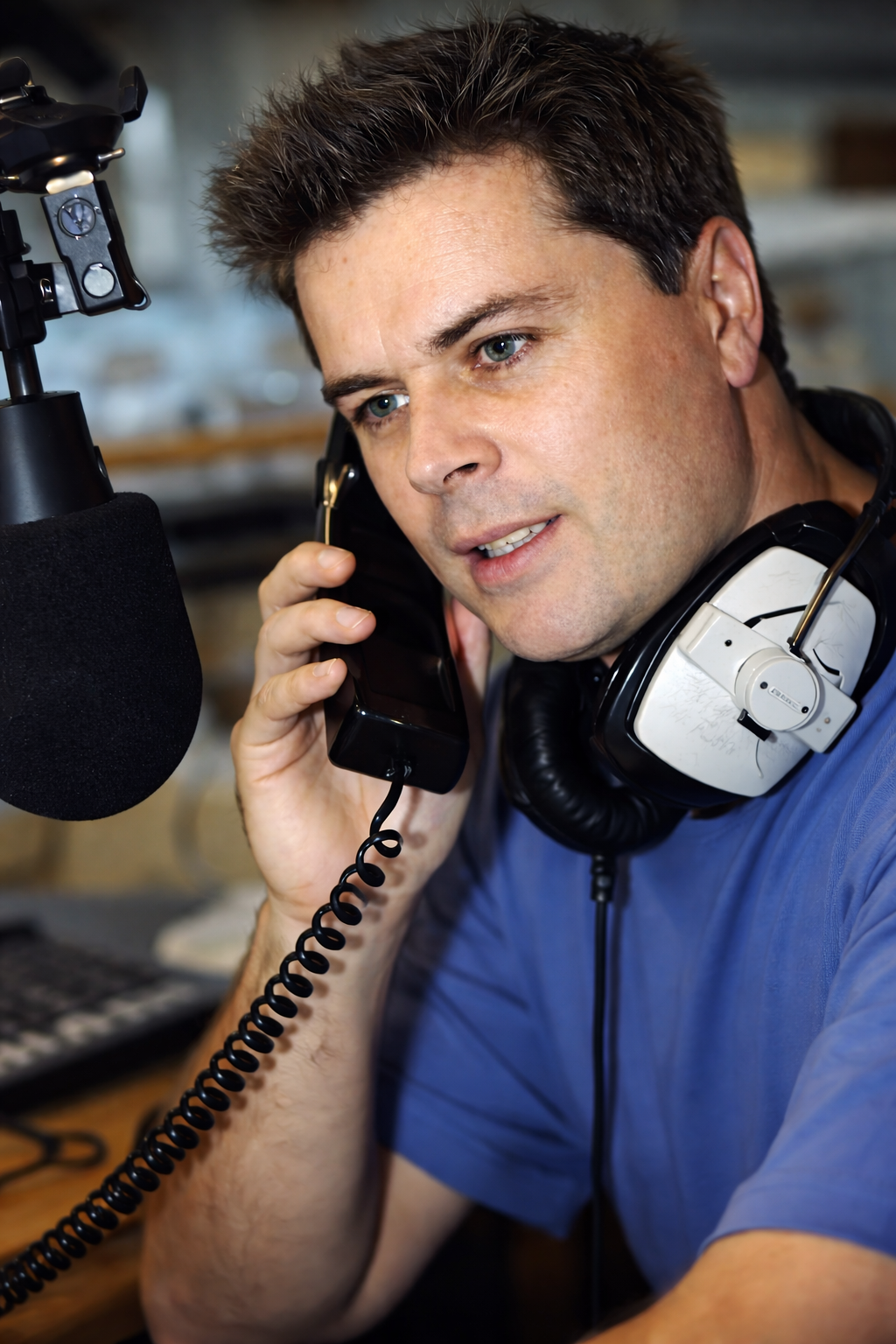
Long before viral clips, podcast pranksters, or outrage engineered for clicks, British radio had a quieter, sharper form of anarchy. It came through a crackling phone line, delivered in a calm, reasonable voice, and it belonged to Steve Penk.
In the 1990s, Penk’s wind-up calls became essential listening, not because they were loud or cruel, but because they were exquisitely patient.

This was comedy built on pauses, politeness, and the slow unravelling of human certainty.
A short biography, before the line goes dead
Steve Penk emerged from Manchester’s vibrant commercial radio scene, rising to prominence at Key 103, where his breakfast show made him one of the North West’s most recognisable voices.
His success there eventually led him to Capital Radio, bringing his particular brand of controlled chaos to a national audience.
While he was a capable all-round presenter, it was the phone calls that cemented his reputation and quietly rewrote what radio comedy could be.
Not pranks. Psychological short stories.
To call Penk’s segments “prank calls” almost misses the point. These were not ambushes or acts of humiliation. They”re carefully scripted scenarios delivered with forensic realism.
Penk would pose as a council official, a concerned citizen, or a perfectly reasonable man with a perfectly unreasonable problem.
The brilliance lay in restraint:
– No shouting but always defensive
– Sly insults
– No rush to the punchline
Instead, listeners are invited to witness something far more dangerous to the ego: confusion. The person on the other end of the line often talked themselves into knots, attempting to maintain authority or politeness while reality gently slipped sideways.
Why they work
Penk understands something fundamental about British culture. We would rather suffer in silence than admit we don’t understand what’s happening.
His calls exploit that instinct mercilessly but often gently, allowing the target to reveal their own absurdity without being pushed.
The humour comes from the tension between what should make sense and what clearly did not.
A request that sounded official but wasn’t. A complaint that followed logic, just not the kind found in this universe.
Would they survive today?
Probably not intact.
Modern broadcasting rules, legal caution, and an audience trained to see everything as potential offence would clip much of Penk’s archive at the knees.
This fear of potentially harmful ‘prank calls’ arising from the Jonathan Ross and Russell Brand debacle years ago.
Consent, safeguarding, and litigation now loom large over live radio.
But that’s precisely why these calls still matter. They are artefacts of a time when radio trusted its audience to sit with discomfort, ambiguity, and long silences. When comedy didn’t need to explain itself or apologise in advance.
A lasting legacy
Steve Penk doesn’t just prank people. He holds up a mirror to bureaucracy, authority, and British politeness, and let listeners watch the reflection wobble.
His influence can be traced through later radio comedy, podcast formats, and even modern satire that relies less on punchlines and more on exposure.
In an age of instant reactions and clipped attention spans, Penk’s work feels almost radical. It reminds us that sometimes the funniest moment on radio is not laughter at all, but the sound of someone realising, far too late, that they’ve been talking absolute nonsense.