
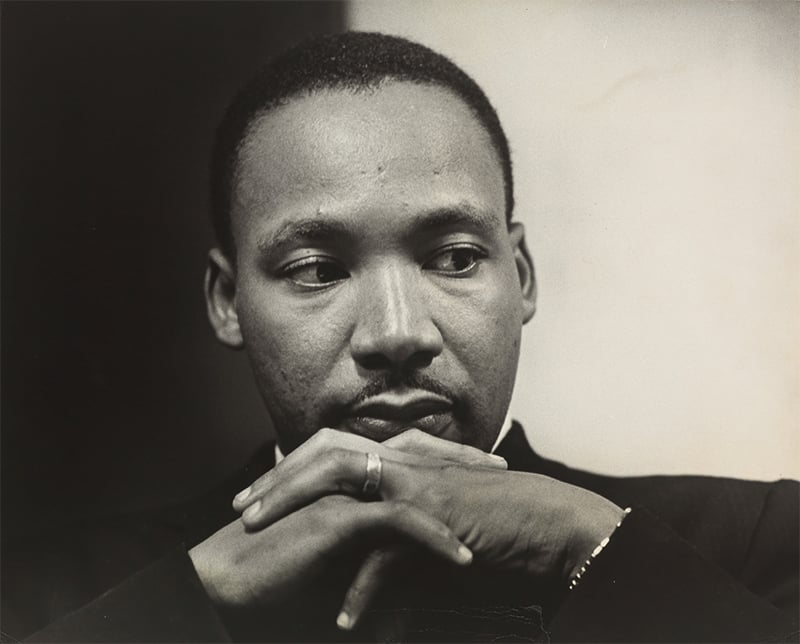
Martin Luther King Jr. (1929–1968) was an American Baptist minister, activist, and the most visible leader of the Civil Rights Movement during the 1950s and 1960s.
Like Mahatma Gandhi, whom he deeply admired, King championed nonviolent resistance (which he called “soul force”) to dismantle racial segregation and discrimination in the United States.

DR. KING CALLS NATION TO JUSTICE WITH ELECTRIFYING SPEECH**
Lincoln Memorial, Washington D.C., August 28, 1963
In a stirring display of unity and moral resolve, more than 200,000 Americans converged yesterday on the nation’s capital for the March on Washington for Jobs and Freedom, an unprecedented gathering that delivered one of the most defining addresses in modern history.
Standing on the steps of the Lincoln Memorial, framed against the reflecting pool and the towering figure of the president who ended slavery, Dr. Martin Luther King Jr., the 34-year-old Baptist minister from Atlanta, delivered a message that rang across the Mall with the clarity of a national conscience finally finding its voice.
“We have come here today to dramatize a shameful condition,” King declared, reminding the crowd that a century after emancipation, millions of Black Americans still lived “in the corners of American society,” bound not by chains but by segregation, discrimination, and economic injustice. He condemned the nation’s failure to honour its founding promises, describing the Constitution and Declaration of Independence as a promissory note the country has yet to redeem.
Yet King’s address was no lament. It was a call to action, delivered with trademark composure sharpened into urgency. “Now is the time,” he said, urging nonviolent protest, steadfast discipline, and zero tolerance for complacency. He rejected the path of bitterness or hatred, insisting that dignity must remain the movement’s bedrock.
Midway through the speech, King shifted into a soaring vision that seemed to sweep the Mall like a rising tide of hope. Departing from his written text, he began to speak of a dream — a dream born of faith and sharpened by struggle.
He imagined a country where justice “flows like water,” where his children are judged by character and not skin colour, where former slave owners and former slaves join hands in equality, where freedom rings “from every hill and molehill” across the United States.
The crowd erupted in applause, many visibly moved. For a moment, the nation seemed to witness not just rhetoric but a roadmap for its own redemption.
Yesterday’s march, organized by civil rights leaders including Bayard Rustin, A. Philip Randolph, and John Lewis, was peaceful, disciplined, and remarkably diverse. Demonstrators held signs demanding federal civil-rights legislation, fair wages, integrated schools, and equal employment opportunities. Observers noted the cooperative presence of law enforcement and volunteers who maintained order throughout the day.
President John F. Kennedy, who has recently introduced a civil-rights bill to Congress, reportedly watched the speech from the White House. Sources close to the administration described the President as “deeply impressed.”
Whether Congress will match the moral force witnessed yesterday remains uncertain, but the day’s message could not have been clearer:
America must choose between its ideals and its injustices.


