
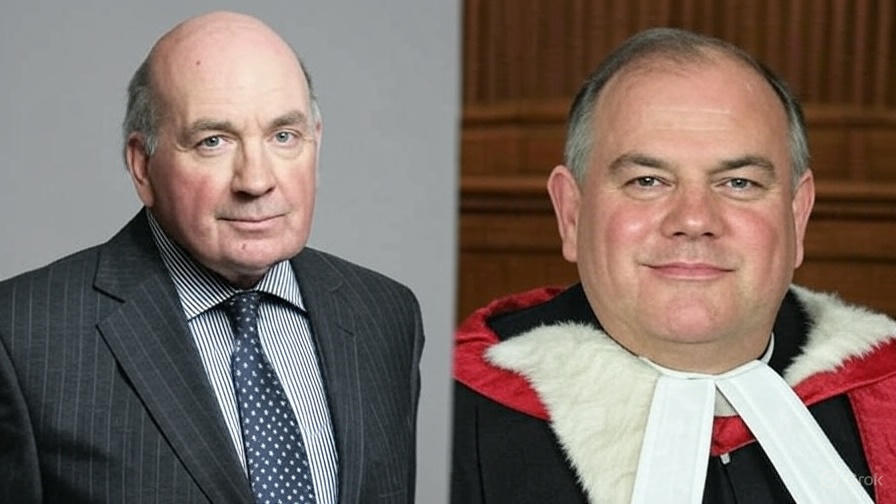
Two members of the House of Lords have been hit with heavy suspensions after an undercover investigation exposed their willingness to trade parliamentary access for commercial advantage, plunging Westminster back into a familiar storm over lobbying and influence.
The House of Lords Conduct Committee confirmed the penalties on Monday, following a Guardian sting in which reporters, posing as business executives, recorded the peers offering introductions and political leverage.
Lord Dannatt: Four-Month Ban and a History of Corporate Advocacy
Crossbench peer Lord Richard Dannatt, 74 — former head of the British Army — received a four-month suspension for offering to facilitate high-level access to ministers across sectors including defence, mining, and fertilisers.
The committee also noted his previous advisory roles with several companies. While these historic activities were not part of the present investigation, they have resurfaced as part of wider public scrutiny around peers’ outside interests.
Among them was his past advocacy for a defence manufacturer whose facilities were later targeted by Palestine Action activists — an episode in which some within the industry went on to describe the protest group as akin to a “proscribed terrorist organisation.” The reference, critics said at the time, reflected the political clout of figures who had supported the company, including Dannatt.
Separately, the committee found that he had contacted officials on behalf of companies paying him as an adviser — including UK Nitrogen and Teledyne UK — and had acted in support of a gold-mining business in which he held shares.
Dannatt said he “deeply regretted” the findings, insisting he had acted “in the national interest,” and pledged to donate his shares to charity. He accepted that “ignorance of the Code of Conduct” was no excuse.
Lord Evans: Five-Month Suspension After Filmed Offers of Influence
Labour peer Lord David Evans of Watford, 82, was handed a five-month ban — the longer penalty reflecting what the committee called multiple breaches that risked “eroding public trust.”
Evans was filmed offering to arrange ministerial access while discussing a potential commercial deal worth “tens of thousands of pounds.” Further inquiries found he had used Lords events to benefit Affinity, a consultancy partly owned by his son. Labour has withdrawn the party whip.
Wider Culture Under Scrutiny
The sting forms part of a broader examination of conduct in the Lords. A Guardian analysis identified around 90 peers with potential conflicts stemming from consultancy work or commercial ties, raising renewed concerns about blurred boundaries between private income and public responsibility.
Prime Minister Keir Starmer, who pledged to replace the Lords with an elected chamber, reiterated his commitment to reform — though he avoided commenting directly on the suspended peers.
Opposition leaders described the scandal as “yet more Westminster sleaze,” while public opinion shifted sharply: 68% of Britons now favour a fully elected second chamber, according to a snap YouGov poll.
A Familiar Storm for an Unelected Chamber
While the suspensions are among the toughest issued in years, critics warn they are unlikely to shift the underlying culture without structural reform.
Whether this moment becomes a catalyst for real change or merely another chapter in the Lords’ long catalogue of controversies remains uncertain.


