
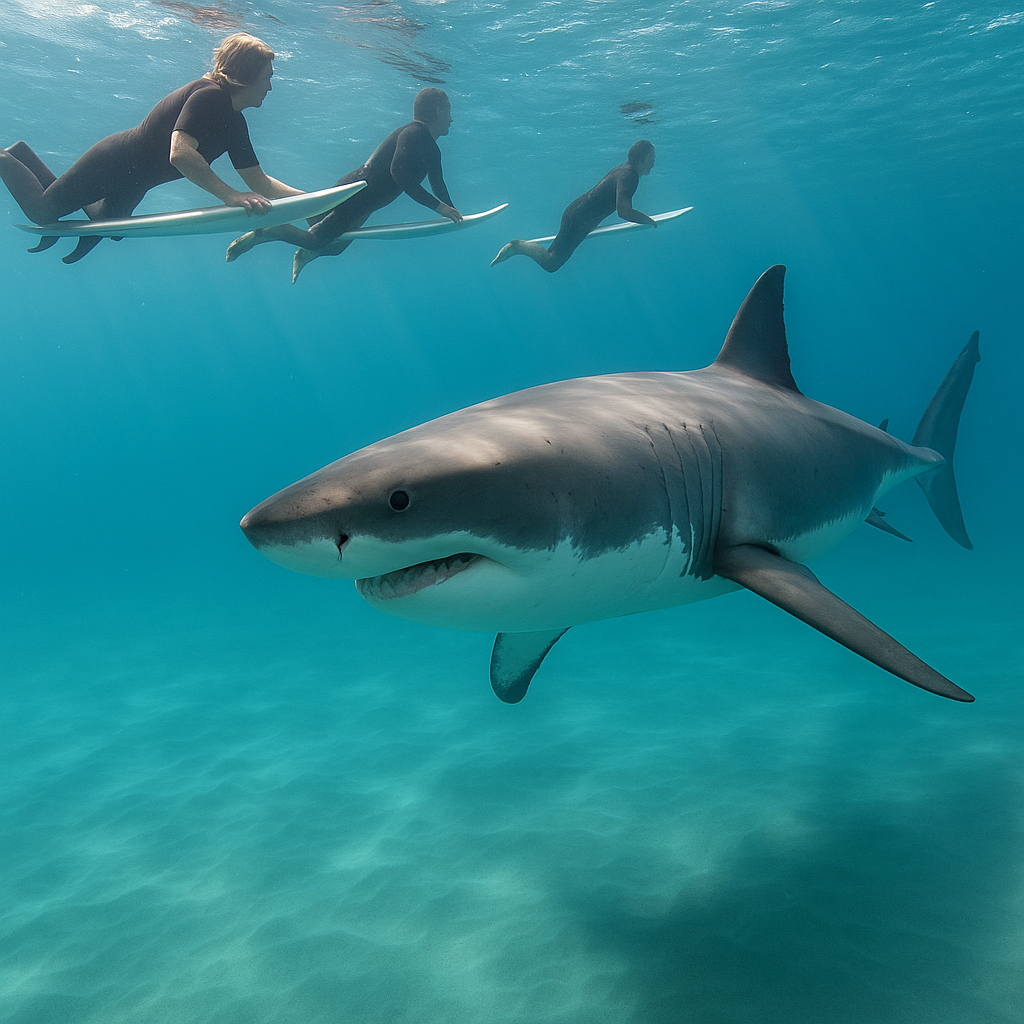
Sydney, 6th September 2025 — In a jarring reminder of nature’s unpredictable cadence, a 57-year-old experienced surfer was fatally attacked by what police describe as a “large shark” off Sydney’s Northern Beaches, near Long Reef, this Saturday morning. He was with friends about 100 m from shore when the creature struck swiftly, ending a life of oceanic devotion in a moment both rare and haunting.

Surfers’ desperate endeavours could not save him; he succumbed to catastrophic injuries at the scene. Onlookers and emergency services responded immediately, but fate would not be swayed. Authorities have since closed surrounding beaches, deployed drones and rescue jets, and sought to identify the shark through forensic evidence, including fragments of the victim’s surfboard.
The community reels. Mourning whispers and condolences flow—especially poignant as the tragedy unfolded just before Father’s Day. The surfer leaves behind family and a grieving community that knows the sea intimately—and yet, not so intimately after today.
Echoes of 2022: The Second Fatal Shark Attack in Sydney in Over Six Decades
This heartbreaking incident marks the second shark-related fatality in Sydney waters in a generation. In February 2022, a 35-year-old British diving instructor, Simon Nellist, was mauled by a great white off Little Bay—Sydney’s first such tragedy since the early 1960s.
The last recorded fatal attack in Sydney before 2022 occurred in 1963 when actress Marcia Hathaway was killed by a shark in Sydney Harbour—leaving a sombre footnote in the city’s history.
Why This Matters: A Stretch of Ocean, A Ripple in Time
These events are startling not only for their cruelty, but for their rarity. More than sixty years passed between fatal attacks—a stretch so long that the ocean’s rhythms felt sacred, nearly inviolate. Now, twice in recent memory, the sea has spoken sharply—and Sydney has listened, silent and shaken.
Authorities and beachgoers are in mourning—and on high alert. Shark nets, drone surveillance, and patrols have been reactivated along popular beaches stretching from Manly to Narrabeen. While these safety measures are not foolproof, they stand as our fragile barriers between thrill and tragedy.
Experts stress these attacks remain extraordinarily rare, but they ignite broader debates: Are warmer oceans nudging predators closer to shore? Are human behaviours—like surfing in quieter, less patrolled spots—elevating risk?

Ocean’s Farewell Verse
In these two tragedies lies an oceanic lullaby: awe for wild nature, edged with the stark refrain that we are never quite safe—not even where we feel most free. These deaths, separated by decades, now form a grim couplet in Sydney’s maritime legacy.
May such sorrow nudge us toward empathy—for both humans and creatures of the deep. May it sharpen our calls for better safety, smarter surveillance, and deeper understanding. In memory, let the sea’s roar be balanced by the solidarity of those who heed its lessons.


