
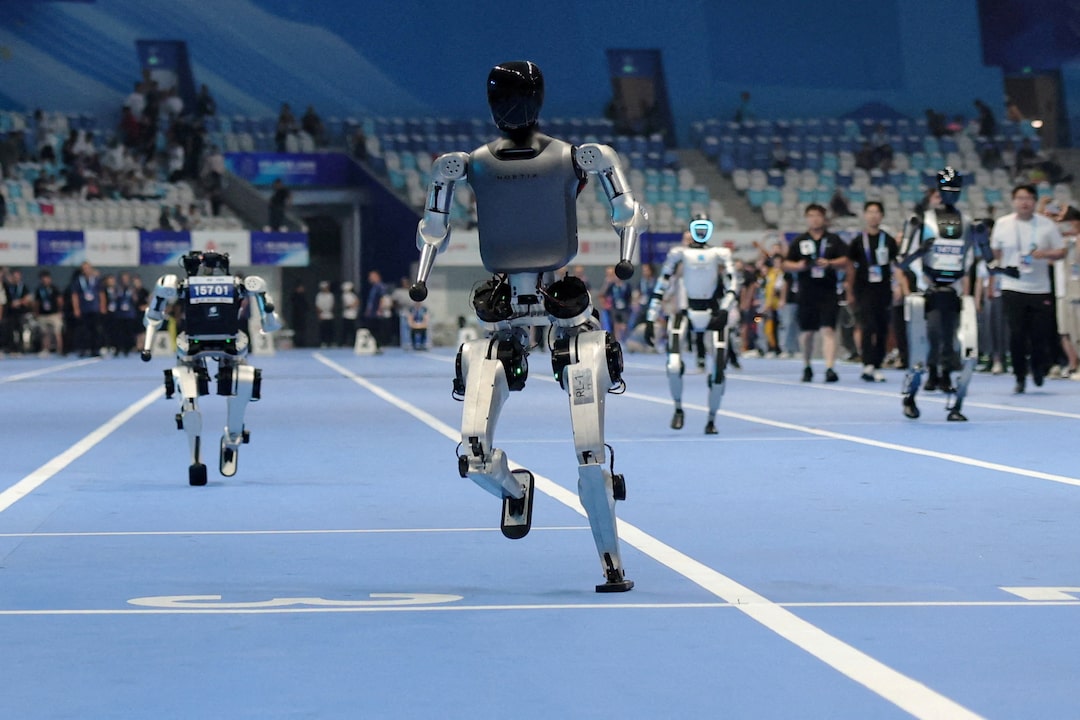
HUMANOID GAMES DAZZLE, STUMBLE, CAPTURE HEARTS
Beijing, August 2025 — In a fusion of ambition and gentle absurdity, the inaugural World Humanoid Robot Games took place in Beijing this August, turning the National Speed Skating Oval into a mechanical coliseum of hope, hilarity, and humble beginnings.
A Global Tech Pageant
Over three days (15–17 August), more than 500 humanoid robots from 280 teams and 16 countries showcased their mettle—and their mechanical wobbles. Participants hailed from universities, private firms, and even middle schools, while the audience shelled out between ¥180 to ¥580 ($25–$80) for a ringside seat to the future.
Events That Made You Laugh, Then Think
The Games featured a wild mix—track and field, football, kickboxing, table tennis, and even sorting medicine, cleaning tasks, and dance performances.

At the opening ceremony, robots bustled through hip‑hop routines, martial arts displays, instrument playing, and fashion modelling—sometimes with dramatic flair (and frequent collapse).
Glory, Glory… or Glitches?
In a robotic 1500 m race, Unitree’s H1 model leapt into the lead, taking first and third—while Tiangong Ultra, famous from April’s half‑marathon splendour, earned a well‑wired second.
Football turned into a gentle steel-bent ballet, with robots colliding into heaps, only to dust themselves off—sometimes with help.
Kickboxing offered its slapstick heroics: a tall robot’s roundhouse miss sent it tumbling to comedic dismay.
Robots vs. Reality: The Awkward Truth
Sure, some robots showed talent—others struggled with the basics. In cleaning and hospitality scenarios, one machine took over 17 minutes to dump trash; tasks like luggage handling and medicine sorting remained clumsy.
Still, even robotic failures were framed as victories: “If we try something and it doesn’t work, we lose the game. That’s sad but better than investing millions in a product that fails,” noted a German competitor.
Why It Matters More Than the Falling Down
China isn’t just staging a comedy—it’s placing a big, metallic bet on the future. The Games aren’t one-offs; they form part of a moonshot to dominate humanoid robotics, plugged into vast national funds and strategic AI ambitions.
Engineers and policymakers alike see the value: each stumble teaches balance. Each malfunction fine-tunes coordination. Public fascination and generous attendance signal growing acceptance—and maybe, affection—for these jerky yet endearing analogues.

The Future Runs Lean and Limping
We’re not witnessing humanoid perfection—yet. But that’s precisely the beauty. These mechanical athletes are lurching into being, not with grace, but with guts.
For humanity’s sake, here’s hoping the next championships see smarter balance, more dexterity, and fewer face-plants. But in the meantime? Let’s cheer the charmingly flawed march of our future robot compatriots.


