
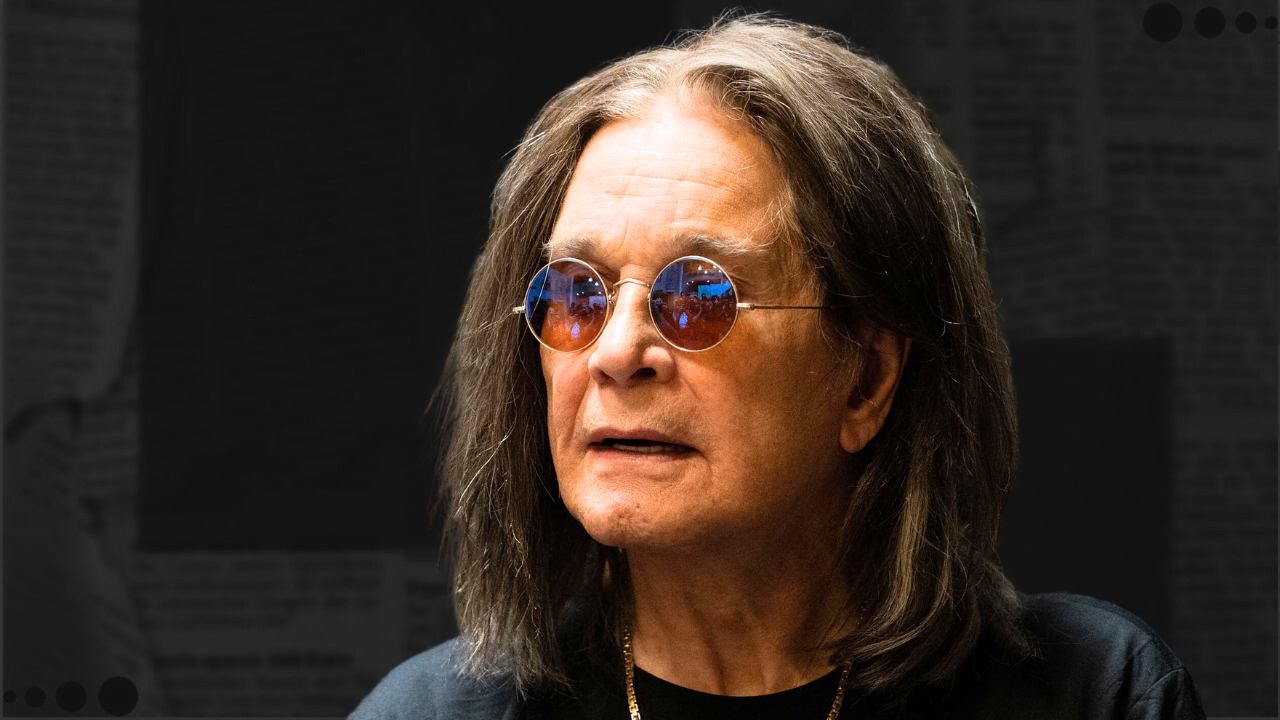
BIRMINGHAM, ENGLAND — In a powerful, poignant farewell that transformed the streets of Birmingham into a river of blackness, tens of thousands gathered on Wednesday, July 30, to honour one of the city’s most legendary sons—Ozzy Osbourne, the original frontman of Black Sabbath and global godfather of heavy metal.

Osbourne, who passed away on July 22 at the age of 76 at his Buckinghamshire home, was remembered with a sweeping public funeral procession through his hometown—a route steeped in personal and musical history. Funded by the Osbourne family and supported by Birmingham authorities, the cortege began at Villa Park and meandered past iconic landmarks from Ozzy’s life: his childhood home on Lodge Road, the Black Sabbath mural on Navigation Street, and The Crown pub, where the band played its first gig back in 1968.
The route culminated at Broad Street’s Black Sabbath Bridge, renamed in 2019 in honour of the band, which is now adorned with flowers, fan tributes, and a sea of memorabilia. A bench dedicated to the group was barely visible under the cascade of messages, photos, and tokens of love.
A visibly emotional Sharon Osbourne, 72, greeted the masses with tearful gratitude, flashing the peace sign to a roaring crowd. Overwhelmed as she stepped from a van alongside her children Kelly and Jack, she wept openly, clutching her face in disbelief at the sea of mourners. Daughter Kelly supported her mother, while son Jack, alongside siblings Aimee and Louis Osbourne, and Ozzy’s grandchildren, stood quietly, many in tears.

At the heart of the procession, the hearse bearing Osbourne’s coffin—adorned with purple flowers spelling out “OZZY”—moved slowly through a crowd chanting “Ozzy, Ozzy, Ozzy—Oi, Oi, Oi!” Flowers rained onto the vehicle, carpeting the road in colour. A local brass ensemble, Bostin’ Brass, performed Sabbath classics like Iron Man and Crazy Train, delivering both catharsis and celebration in a send-off befitting the Prince of Darkness himself.
The event was as much tribute as it was theatrical, in true Osbourne spirit. In interviews over the years, Ozzy had joked that he wanted “some pranks” at his funeral, even a Justin Bieber song—anything but a mope-fest. Wednesday struck that strange harmony: reverent yet rowdy, somber yet defiant. A true metal requiem.
Osbourne’s death came just 17 days after a moving final appearance in his native city—the “Back to the Beginning” concert—where he performed seated due to complications from a rare form of Parkinson’s disease (Parkin 2), worsened by decades of substance abuse. It marked the end of a remarkable chapter not just for Ozzy, but for rock history itself.

Tributes have flooded in from across the musical spectrum. Billy Corgan of Smashing Pumpkins described discovering Master of Reality as life-altering. John Darnielle of the Mountain Goats called Ozzy’s voice “haunting and heavy without cliché.” Daughter Kelly Osbourne, reflecting on their reality TV fame, quipped: “One day we were just weird Brits in L.A.—the next, we were America’s weirdest family.”
Following the procession, a private burial was held at Welders House, the Osbourne estate in Buckinghamshire, where Ozzy spent his final years with Sharon. The Lord Mayor of Birmingham met the family at the bridge to officially express the city’s enduring pride in its most famous musical son.
From Brummie backstreets to global superstardom, Osbourne leaves behind a towering legacy—heavy metal architect, reality television pioneer, and cultural outlaw. As one handwritten fan note left at the bridge simply read:
“Thanks for everything, Ozzy. Rest easy, our Prince of Darkness.”


