
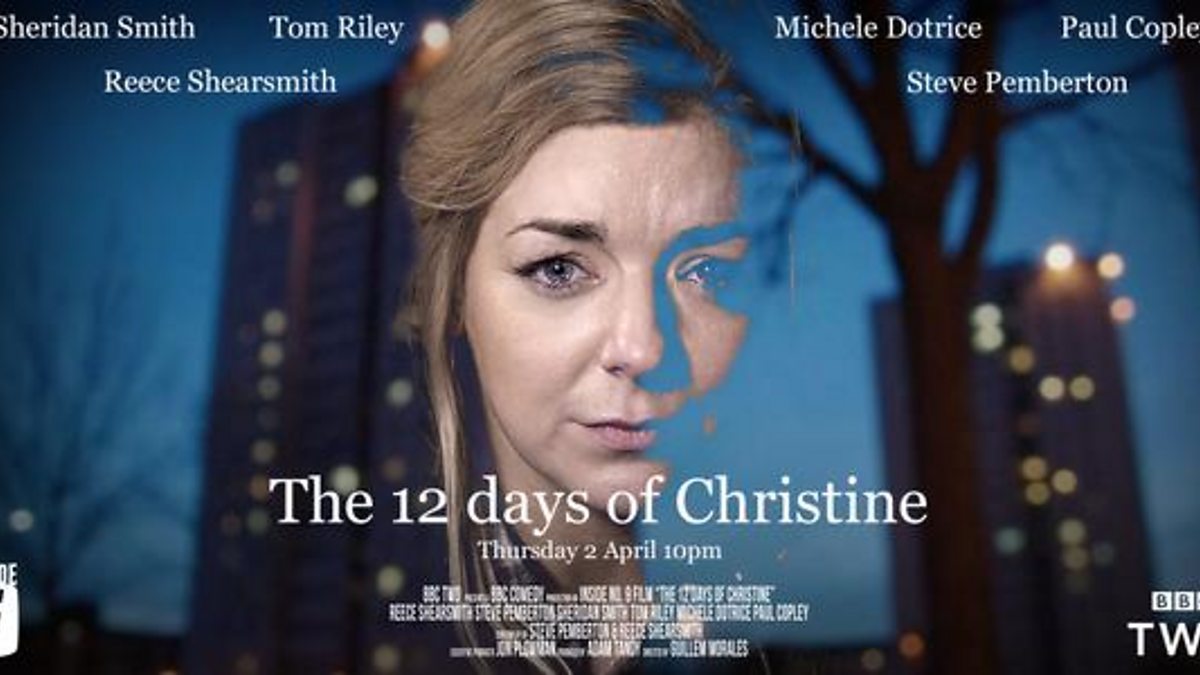
It begins with a bang—and ends with a whisper. A woman in her thirties, Christine, played with fragile brilliance by Sheridan Smith, lives what appears to be a familiar, British life: breakups, new love, children, family tension, the annual repetition of Christmas rituals. But as we now know, this was never simply a holiday drama. It was the slow revelation of a life slipping away—told through memory fragments, spectral time-jumps, and moments of quiet devastation.
Christine’s story, pieced together like a jigsaw puzzle with missing corners, is the subject of growing cultural dissection following the airing of The Twelve Days of Christine, an episode of Inside No. 9 written by Reece Shearsmith and Steve Pemberton.
But who was Christine? And what really happened?
A Life Seen in Reverse
Over a span of 12 years—symbolised as 12 Christmases—viewers witness Christine’s life unfold in nonlinear fashion. She meets Adam, falls in love, raises a child, loses a parent, splits up, reconnects. But nothing is quite as it seems. Figures appear in her flat unannounced. She hears whispers. There are knocks at the door. Ghosts of Christmas past—or warnings from the present?
Time doesn’t move forward—it fractures.
And then there are the eggs.
In one scene, Christine receives a box of eggs from her mother. It’s an innocuous moment at first glance, but it is one of many recurring symbols—life, fragility, routine, care. Eggs need to be handled delicately, like memories, like grief. Like Christine.
The Moment of Realisation
In the final minutes, the truth unravels like tinsel from a broken bauble: Christine is dying. She has been in a car crash on Christmas Eve, hit by an oncoming vehicle. What we’ve witnessed is not her life in real time—but her mind, flickering through memories in the final seconds of consciousness.
The “twelve days” are not holidays—they are synaptic misfires, neurological echoes, loved ones gathering around her hospital bed, calling her back.
The whispers? Hospital voices.
The eggs? A subconscious return to moments of nurture, comfort, the last tactile memories of domestic life.
The man in the dark corners, always watching? Not a ghost, but the face of the driver, wracked with guilt and present in her final moment.
As Adam, the man she loved, leans over her in the ambulance, calling her name through the haze, the audience realises: we’ve been watching her let go.
A Cultural Phenomenon
Since its release, The Twelve Days of Christine has been hailed as one of British television’s finest standalone dramas. It has sparked university essays, grief counselling discussions, and countless online fan theories.
It is a ghost story, yes—but the ghost is Christine herself, haunting her own memories as she fades.
The episode ends not with horror, but with grace. A sad Christmas carol. A final goodbye. A cracked egg and a life that mattered.
In a world of flashy content and loud endings, The Twelve Days of Christine reminds us of the quiet tragedy of being human—and how memory, love, and grief can all live inside something as fragile as an egg.


