
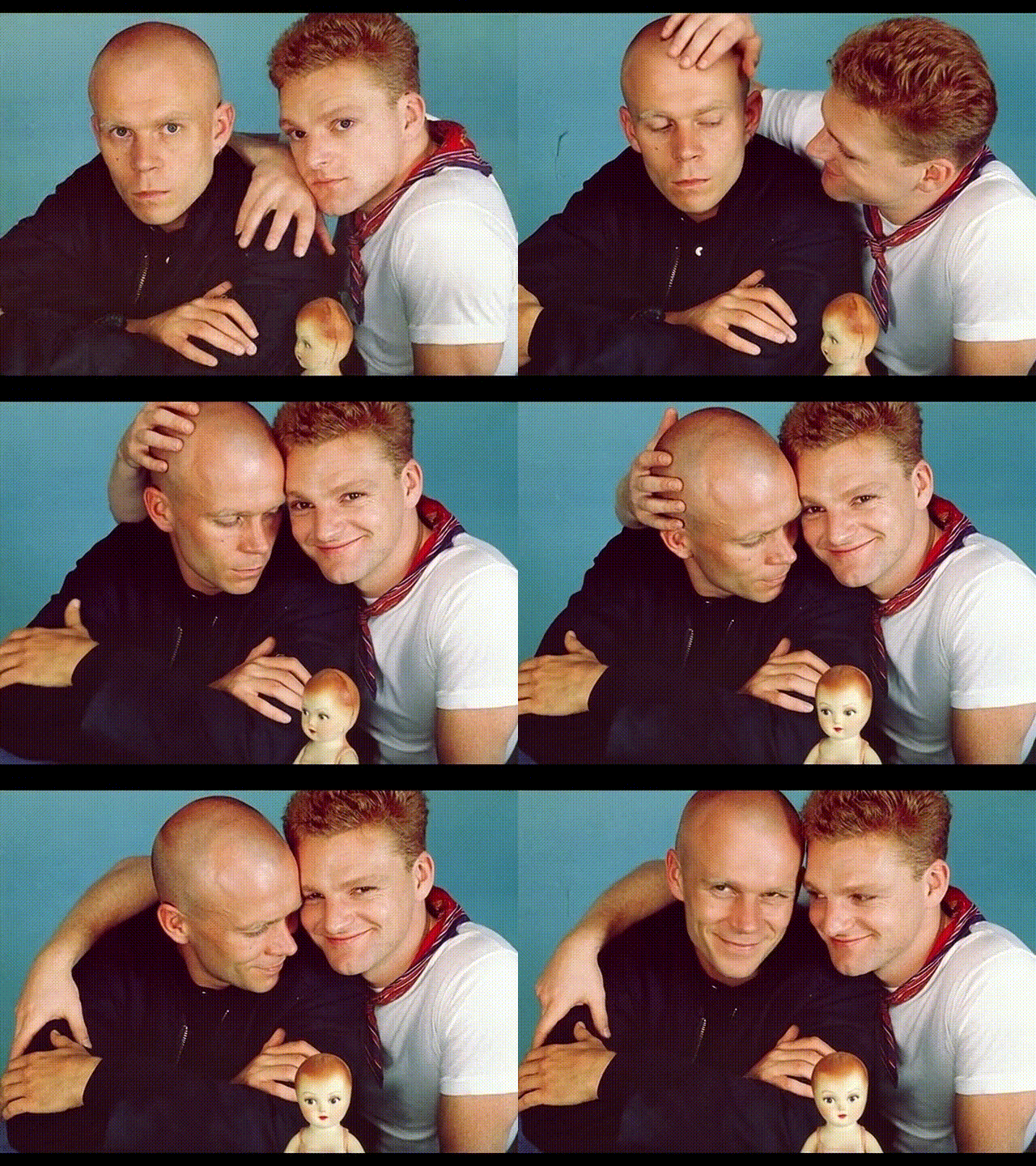
Andy Bell & Vince Clarke: How Erasure Turned Synthpop Into Human Electricity
There are musical duos, and then there are the alchemists. Andy Bell and Vince Clarke sit squarely in the latter group, soldering wires, heartbreak and joy into a sound that never quite ages, only evolves, like neon that refuses to dim.
When Clarke placed that small advert in Melody Maker in 1985, he was already something of a pop Lazarus. He’d helped birth Depeche Mode, conjured Yazoo with Alison Moyet, and then The Assembly. A lesser soul might have rested on past glories. Clarke, however, has always carried a quiet itch in his circuitry. He wanted something new… someone whose voice could slip through sorrow and celebration with equal grace.
Enter Andy Bell, a young whirlwind with the posture of a pop prophet and a voice that could turn a grey English morning into a sunrise. Bell’s audition wasn’t just a performance; it was a declaration. Clarke heard not just talent but truth. And so Erasure sparked into being.
Together, these two built a musical universe where synths weren’t cold machines but engines of feeling. Clarke, the quiet architect, fed melody into the matrix; Bell, the luminous frontman, breathed human thunder into it. Songs like A Little Respect, Sometimes and Oh L’Amour didn’t just chart well; they stitched themselves into the emotional memory of millions. Clubs pulsed with them. Bedrooms cried to them. Pride parades soared with them.
Erasure’s queer influence is profound, unapologetic, and enduring—one could argue—revolutionary for its time and place.
When Erasure emerged in 1985, mainstream pop was still largely a straight-acting space. Gay visibility in music existed (Bronski Beat, Frankie Goes to Hollywood, Pet Shop Boys), but it was often coded, ironic, or wrapped in a layer of plausible deniability. Andy Bell shattered that. From day one he was openly, flamboyantly, joyfully gay—on stage in glitter and eyeliner, in interviews talking about boyfriends, on Top of the Pops singing love songs that were unmistakably addressed to men. There was no “is he or isn’t he” game; he simply existed as a gay man making universal pop music.
That visibility mattered enormously in the late 1980s and early 1990s:
- UK’s Section 28 (1988) had just banned the “promotion” of homosexuality by local authorities, creating a chilling effect in schools and media.
- The AIDS crisis was at its deadliest, and gay men were routinely demonised in the press.
- Queer teenagers growing up in small towns often had almost no positive representation.
Into that darkness came Andy Bell—prancing, camp, vulnerable, sexual, and completely unafraid—singing lines like “Who needs love like that?” or “I love to hate you” or begging for “A Little Respect.” Suddenly a whole generation of queer kids (and closeted adults) heard their inner lives reflected in massive, glittering, chart-topping pop songs. Erasure gave them permission to feel fabulous instead of ashamed.
Bell’s unapologetic queer presence mattered. He stood centre stage, radiant, irreverent, heartbreakingly honest. He didn’t ask the world for permission; he simply existed in full colour, making space for countless LGBTQ+ listeners who’d grown too used to shrinking themselves. Clarke, ever the understated craftsman, let his melodies carry Bell’s message further than any manifesto could.
Erasure’s legacy isn’t just about decades of hits, sold-out tours or platinum records. It’s about creating a sanctuary. A place where joy could be defiantly loud, where vulnerability didn’t need armour, and where electronic pop felt like a beating heart rather than a machine.
Nearly forty years on, they’re still out there, two orbiting stars that somehow keep sharing the same gravity. Vince with his quiet smile and wires. Andy with his glitter, tenderness and volcanic spirit. And the rest of us, lucky enough to live in the glow they cast.
Because when Erasure plays, the world briefly remembers how to feel limitless.
More
Tools

Oh L’Amour
Song by Erasure ‧ 1986
Lyrics
Oh l’amour
Broke my heart
Now I’m aching for you
Mon amour
What’s a boy in love
Supposed to do?
Looking for you
You were looking for me
Always reaching for you
You were too blind to see
Oh, love of my heart
Why leave me alone?
I’m falling apart
No good on my own


