
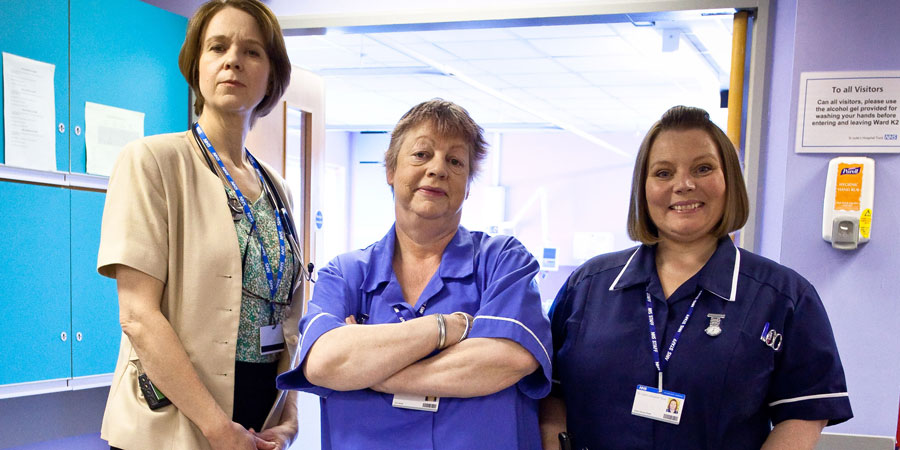
When Getting On quietly debuted on BBC Four in 2009, few could have predicted that this low-budget, darkly comic hospital drama would end up making waves not just in Britain, but across the Atlantic. Written by the formidable trio of Jo Brand, Vicki Pepperdine, and Joanna Scanlan—all of whom starred in the series—the show pulled back the clinical curtain on the gritty, mundane, and often absurd realities of life on a geriatric NHS ward.
By its final season in 2012, Getting On had not only become a cult hit in the UK, but had also inspired a full-blown American adaptation on HBO, complete with its own acclaimed cast and cultural tweaks. But what gave the show its cross-border potency wasn’t just the humour—it was its unflinching portrayal of the day-to-day bureaucracy and emotional toll shouldered by nurses, doctors, and ward sisters alike.
The Quiet Hell of Forms and Guidelines
At the heart of Getting On was the portrayal of NHS staff battling not only disease, dementia, and death—but also the endless cascade of forms, protocols, and contradictory edicts from “above.” Nurse Kim Wilde (Jo Brand) and Sister Den Flixter (Joanna Scanlan) exemplify this daily push-pull between compassion and compliance. Whether it was an infection-control audit or a “Dignity Champion” review, the show nailed how well-meaning guidelines often clashed with the messy, unpredictable realities of patient care.

The series captured a painful truth: in today’s NHS, the nurse isn’t just a caregiver—they’re a compliance officer, risk assessor, and IT systems manager, often all at once. The fear of breaching a guideline, even unintentionally, haunts staff, as violations can trigger a cascade of professional jeopardy, including being “recalled to practice”—a Kafkaesque process that can unmoor even the most experienced staffer.
Hands-on Care in an Age of Lifting Machines
The NHS officially recommends hoists and mechanical aids for lifting patients—an understandable move to protect both staff and patients. But in practice, as Getting On illustrated with brilliant understatement, there’s often no time. In a ward where a confused patient soils their bed or another falls trying to reach the loo, the nurse’s instinct isn’t to wait for a team with a hoist. It’s to act. To lift. To care. And in doing so, they risk reprimand—simply for choosing kindness over compliance.
This is the tightrope nurses walk daily. “Old-fashioned nursing,” as some call it—being hands-on, warm, intuitive—clashes with the bureaucratic doctrine that now underpins NHS care. A care plan can be immaculate on paper while a real patient is left cold, undignified, and unwashed.

American Success, British Origin
The HBO version of Getting On, launched in 2013, retained much of the dry wit and bleak realism of its British forerunner. Led by Laurie Metcalf, Niecy Nash, and Alex Borstein, it Americanised some of the context but stayed faithful to the series’ DNA: frustrated professionals trapped in a web of futility and form-filling, doing their best in a system that often doesn’t help them.
In both versions, the ward itself becomes a metaphor: outdated, underfunded, burdened by legacy systems and emotional weight. But Getting On managed something rare—it made the quiet crisis of care into something funny, furious, and deeply human.
The Final Diagnosis
Even a decade later, Getting On remains a sharp autopsy of NHS modernity. While real nurses still struggle under chronic staffing shortages, IT meltdowns, and the gnawing fear of litigation, the show reminds us that behind every tick box is a person: tired, trying, and often close to tears.
In the battle between bureaucracy and bedside care, Getting On sides with the nurse—overworked, under-thanked, but always showing up.
And in the quiet hours of the night shift, when all the senior managers have gone home and only the patients and the hum of the machines remain, that’s what counts.
For BBC information visit BBC Four – Getting On


