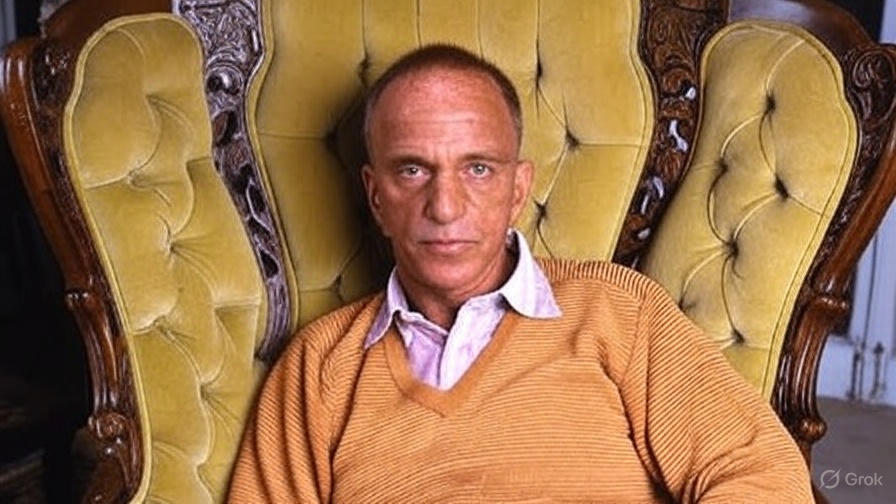
Roy Cohn was one of the most consequential behind-the-scenes operators in 20th-century American power politics.
His real-life influence on Donald Trump was significant but only one (late) chapter in a much longer, darker career. Here’s the unvarnished record:
1. Early career – the making of a political hitman (1950s)
– Chief counsel to Senator Joseph McCarthy during the 1953–54 Army-McCarthy hearings and the broader anti-communist witch hunts.

– Aggressively pushed the prosecution of Julius and Ethel Rosenberg (executed in 1953); Cohn later bragged he personally pressured the judge to impose the death penalty.
– Perjured himself repeatedly during the McCarthy period and was widely blamed for smearing innocent people.
2. New York power-broker era (1960s–1980s)
Became the ultimate “fixer” for mob-connected developers, Studio 54 owners, the Catholic Archdiocese of New York, Yankee owner George Steinbrenner, and multiple Mafia families (Gambino, Genovese).
Represented or socialized with Anthony “Fat Tony” Salerno, Paul Castellano, and John Gotti’s associates while simultaneously being a regular at Reagan White House events.
Ran a law firm that was essentially a one-stop shop for anyone who needed permits, judges influenced, prosecutors stalled, or headlines killed.
3. Direct mentorship of Donald Trump (1973–1986)
Trump first hired Cohn in 1973 to fight the DOJ’s racial-discrimination lawsuit against Trump Management.
Cohn’s strategy: countersue the government for $100 million, hold a press conference calling the charges “irresponsible and baseless,” and never apologize. (Case eventually settled with no admission of guilt—the template for Trump’s lifelong legal playbook.)
Cohn introduced young Donald to his entire Rolodex: media columnists (Liz Smith, Cindy Adams), politicians (Senator Al D’Amato), prosecutors, union bosses, and bankers.
Taught Trump the three rules he lived by (the ones repeated verbatim in “The Apprentice” film):
- Attack, Attack, Attack
- Admit nothing, deny everything.
- Always claim victory no matter what.
Cohn took Trump to Studio 54, Le Club, and Regine’s; made sure Page Six always had a Trump item.
Even on his deathbed in 1986 (officially from “liver cancer,” while secretly dying of AIDS), Cohn was still calling reporters to kill stories about his illness and Trump was one of the very few people he still took calls from.
4. Lasting legacy in American politics & culture
Helped pioneer the modern politics of personal destruction, loyalty over competence, and “alternative facts.”
His protégé network (besides Trump) included Roger Stone (who has Cohn’s portrait tattooed on his back) and indirectly Paul Manafort and others who later worked for Trump.
The AIDS crisis: Cohn used his connections to get experimental AZT while publicly insisting he didn’t have AIDS and helping the Reagan administration slow-walk the crisis.
In short: Roy Cohn didn’t just influence Trump—he gave him the operating system. The never-apologize, sue-everyone, dominate-the-headlines, loyalty-above-all approach that still defines Trump’s style was basically Cohnism downloaded directly into a 28-year-old real-estate heir in the 1970s.
As Trump himself said at Cohn’s funeral in 1986: “Where’s the warmth? I’m here to tell you—there was a lot of warmth. But most of all, he was a guy who got things done.”