
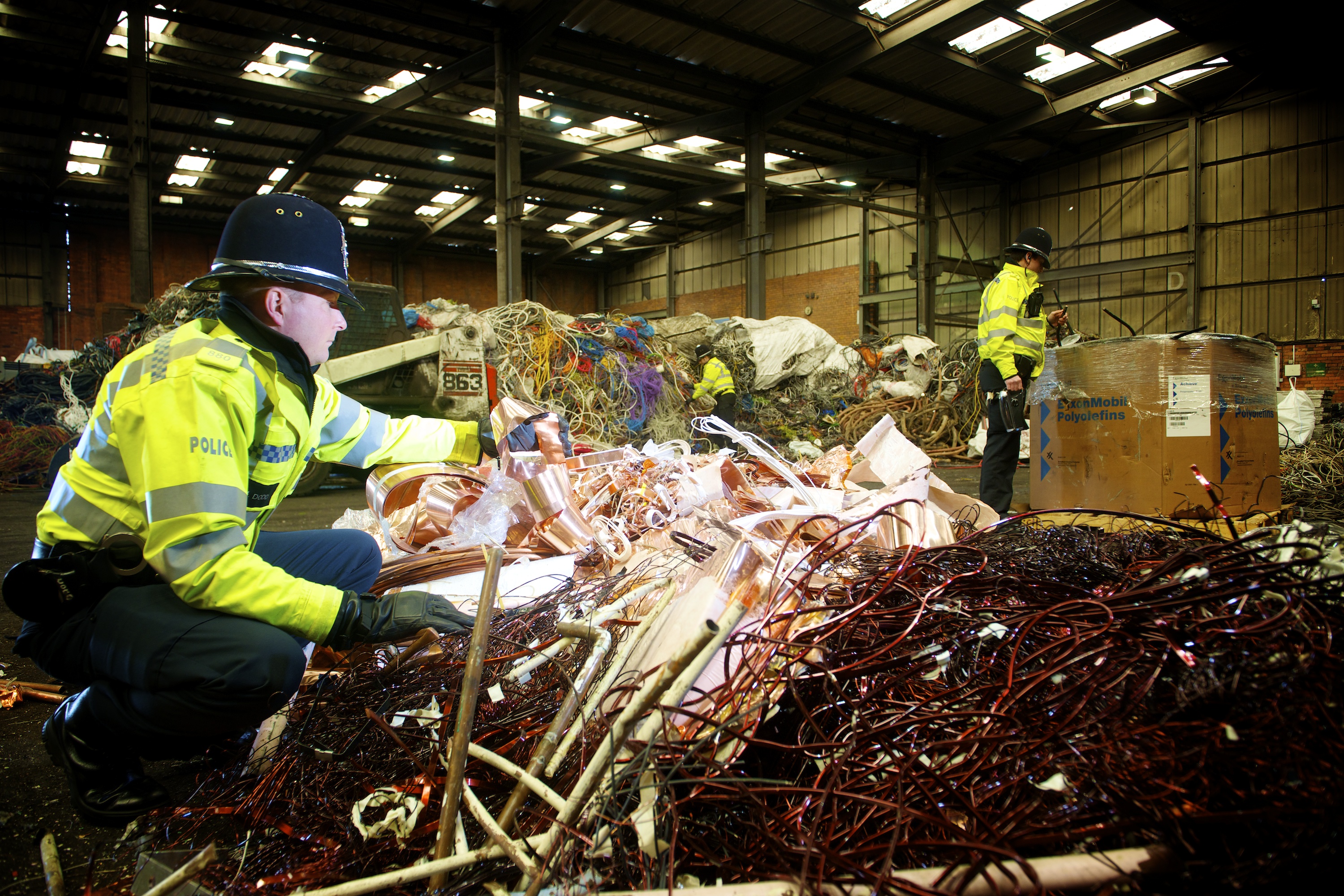
In the early 2010s, the UK faced a growing scourge: thieves stripping churches, infrastructure, railway cables, and vehicles of their metal.
These weren’t mere opportunistic suburban slide-pliers—they were organized networks feeding off our heritage and disrupting daily life. At its height, metal theft was costing the economy £220 million a year .
Enter Operation Crucible
Launched in early September 2016, Operation Crucible was the nation’s first multi-agency enforcement blitz specifically targeting metal theft networks. Police forces across England and Wales—including British Transport Police, Metropolitan Police, and constabularies from Hertfordshire to Cambridgeshire—joined forces with Historic England, Trading Standards, HMRC, the UK Border Agency, and the Church Buildings Council on the front lines.
Involved agencies include:
British Transport Police
Metropolitan Police
Hertfordshire Constabulary
Norfolk Constabulary
Suffolk Constabulary
Northamptonshire Police
Leicestershire Police
Essex Police
Cambridgeshire Constabulary
UK Border Agency
Her Majesty’s Revenue and Customs
Trading Standards
Historic Buildings and Monuments Commission for England
What Happened
During that inaugural week (5–9 September 2016):
Scrap metal dealers were inspected, and anyone dealing cash was warned or penalised.
Mobile collectors were stopped; one was arrested and several were fined for paperwork offences. In Hertfordshire alone, 346 vehicles were inspected, and one was confiscated due to no insurance.
Heritage assets were not merely collateral; they were central to the operation, with experts from Historic England assisting police in identifying metal stripped from churches, monuments, and other protected sites.

Who Were the Criminals?
Operation Crucible didn’t focus on beloved lone opportunists—it was about hitting organised crime groups (OCGs) operating scrap-to-cash pipelines. These gangs varied in size from small rings to sprawling networks, and they often facilitated the theft of lead, copper cables, and catalytic converters for resale both within the UK and internationally.
Why It Matters
Heritage saved: Every lead sheet rescued, every monument preserved, was a victory against cultural erosion.
MaMarket disruption: The operation made it clear that cash-for-metal transactions would not remain unquestioned.
Multi-agency power: Enforcing change isn’t just about arrests; it’s about building intelligence infrastructure, streamlining scrap dealer regulation, and empowering heritage defenders.
Where It Stands Now
Operation Crucible remains ongoing, embedded in a broader structure of multi-agency vigilance and intelligence-sharing across the UK’s policing, heritage, and waste regulation frameworks .
In the Headlines
Operation Crucible was more than a week-long blitz—it was a clarion call for protecting both our infrastructure and our shared history from profit-driven vandals


