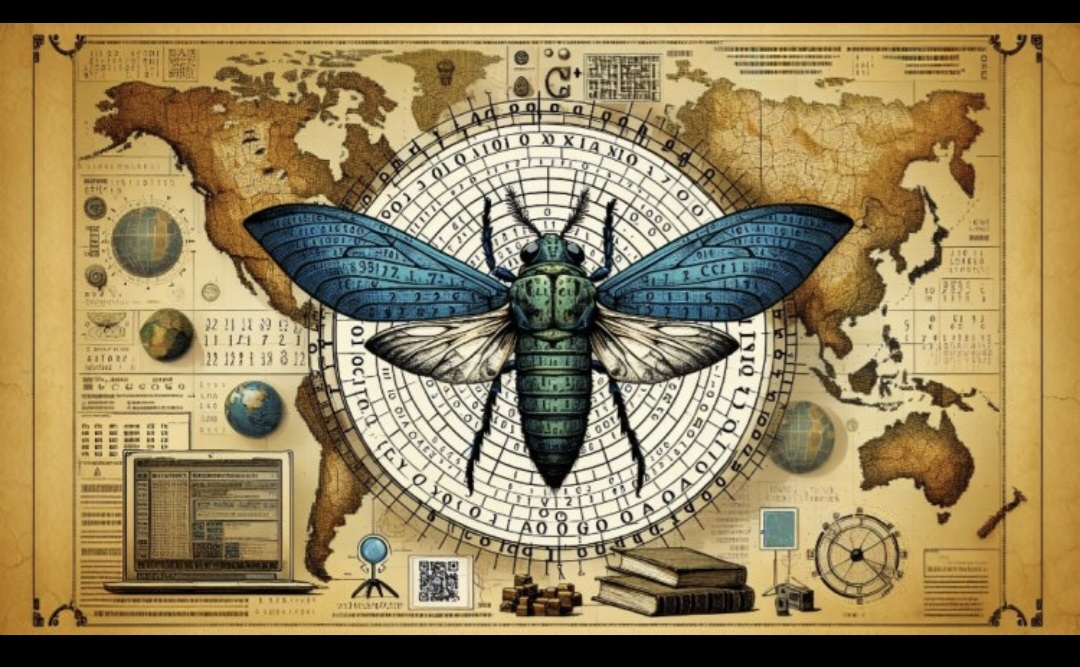
“We are looking for highly intelligent individuals. To find them, we have devised a test.”
In early January 2012, an innocuous image posted on 4chan announced a cryptic recruitment plea: “We are looking for highly intelligent individuals. To find them, we have devised a test.” Thus began Cicada 3301, an extraordinary cryptographic labyrinth that would span three years and enshroud itself in mystery.
🧩 A Worldwide Puzzle
The three puzzle seasons—January 2012, 2013, and 2014—blended digital steganography with real-world scavenger hunts. The first clue invited codebreakers to extract hidden messages from images using tools like OutGuess, revealing URLs and cryptic texts. Physical posters appeared across continents—including Warsaw, Seattle, Seoul, and Sydney—each embedded with QR codes and coordinates.
Participants who reached the darknet finale were met with one chilling message: “We want the best, not the followers.” Those selected—rumoured to number in the dozens—disappeared from the public record, their identities and motives remaining veiled.

🔍 Who Was Behind It?
Editorial speculation invites a handful of theories:
Intelligence recruitment?
With cryptographic, steganographic, and privacy-focused content, some suspect Cicada 3301 was an intelligence agency’s covert hiring tool—perhaps NSA, CIA, MI6, or GCHQ. Indeed, both NSA and CIA have dabbled in puzzle-based recruitment campaigns.
**ARG or digital art project?**
Others argue it was a creative exercise—an alternate-reality game or intellectual art project with no agenda other than to challenge the inspired few.
**University or private cryptography collective?**
The puzzle’s breadth and technical demand suggest a coordinated group—possibly an academic or underground collective intrigued by privacy and code.
No credible evidence supports links to organised crime or extremist ideologies; a PGP‑signed statement in 2017 denied illegal affiliations.

🎓 Legacy and Influence
Despite going silent after 2014—except for a clue in 2016 and a PGP message in 2017—the legacy of Cicada 3301 endures:
Liber Primus, an unfinished runic manuscript from the puzzles, remains partly undecoded, still captivating researchers.
National agencies like the U.S. Navy, NSA, and GCHQ have since launched their code-breaking campaigns in its spirit.
It’s inspired by books, podcasts, documentaries, and even mainstream entertainment—affirming its status as a digital legend.
1
📌 Final Word
Cicada 3301 remains a haunting enigma—a mirrored labyrinth of intelligence and art. Was it a clandestine recruitment campaign, an intellectual treasure hunt, or a beautifully crafted masquerade? We may never know. But one truth persists: in a world drowning in data, this was a siren’s call to those who cherish secrets and seek meaning in the hidden.
🎯 References
1. “Cicada 3301 first appeared in January 2012… puzzles eventually pointed to locations in the real world” – The Guardian, Alex Hern
2. “The puzzles began on 4chan… steganography… medieval Welsh manuscripts” – NPR, NPR Staff
3. “Eight sets of puzzles posted… January 2012–2014… final PGP message April 2017” – Wikipedia
4. “Recruitment efforts through puzzles” – David Kushner/Rolling Stone; NSA & CIA puzzle usage
5. “Physical tapestries… geo‑coordinates… posters… PGP check” – Interlochen Public Radio