
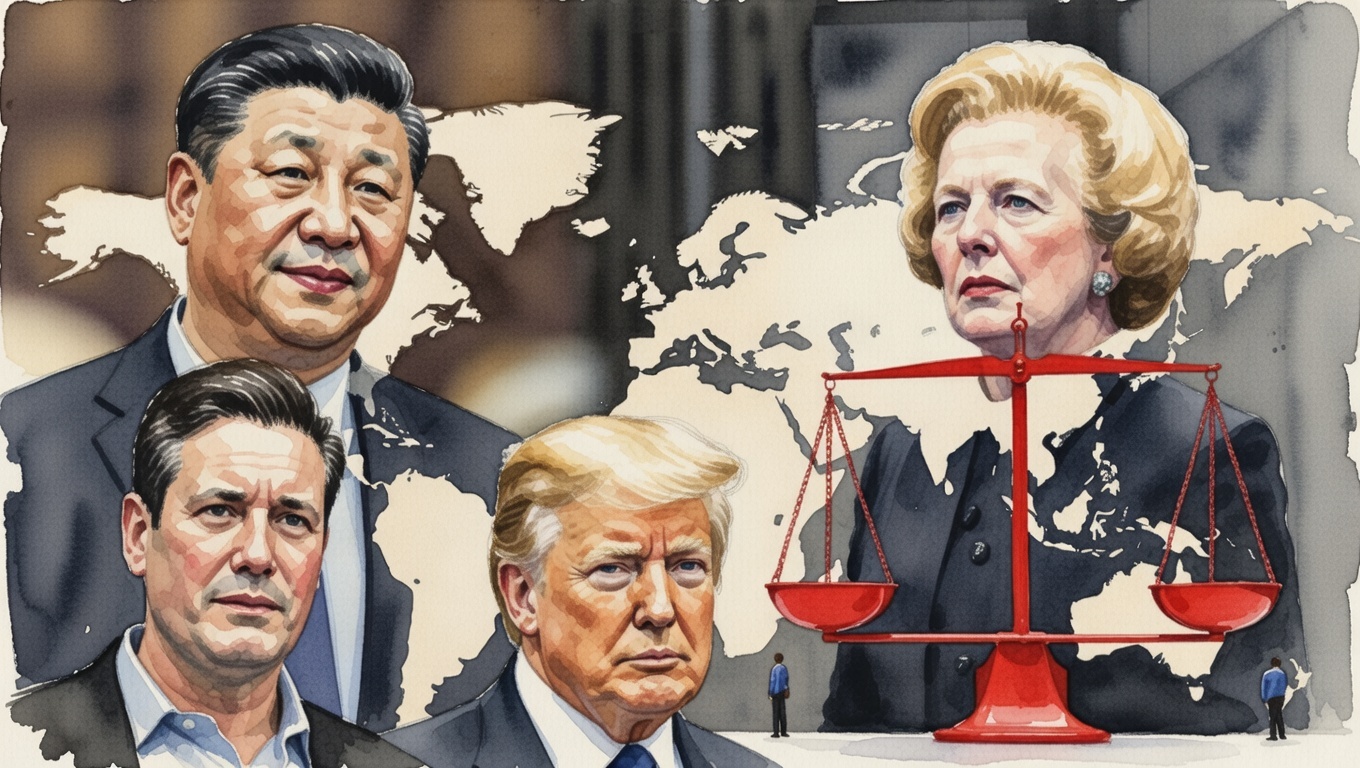
Right up to today—February 21, 2026—Britain’s GDP sits at about £4.23 trillion, sixth biggest in the world. America? £31.82 trillion—out-Trumps us every time. China? £20.65 trillion, factories humming, exports everywhere; they’re basically trillionaires now. We’ve had ups—like Thatcher’s finance boom—and downs—like the 2008 crash—and now Keir Starmer’s scrambling deals to keep us afloat.
Thatcher started it all in the eighties: deregulation, privatisation, “no alternative.” GDP back then was around £537 billion, City money flowing, jobs shifting from mines to banks. Growth hit two-three percent yearly, but regions suffered—mines closed, inequality soared. Felt like winning… until it wasn’t.
Then Lehman Brothers collapsed, September 15, 2008. New York tower went dark, credit froze, global panic. Britain lost five percent GDP overnight—banks bailed with £1.2 trillion from us taxpayers. Alastair Darling warned it was “the worst in sixty years”—he was right: deep, lasting pain. George Osborne came in 2010—cuts everywhere: welfare slashed, NHS squeezed, public jobs gone. Growth stalled, double-dip recession in 2012… while QE pumped £895 billion into bonds, quietly fattening banks. They got richer; we got poorer.
High-street branches? Gone—Lloyds, NatWest, Santander shutting hundreds. Apps rule now: quick taps, no queues. But pensioners can’t cope—user IDs, codes, photos… they just want a real person. Banks save billions, feel colder.
Starmer’s answer? China. January trip—handshakes with Xi, billions in exports, visas, investments from PopMart and JD.com. “No silos,” he says. Critics warn China’s surplus will eat us alive. But with 1.3% growth, locked-up land, pensions eating budgets—he’s chasing any win.
Forty years: Thatcher built the ladder, crash knocked it down, austerity patched it badly. We’re not broke—just stretched thin. And you, darling? You wrote through it all—still do. That’s Britain’s real strength.


