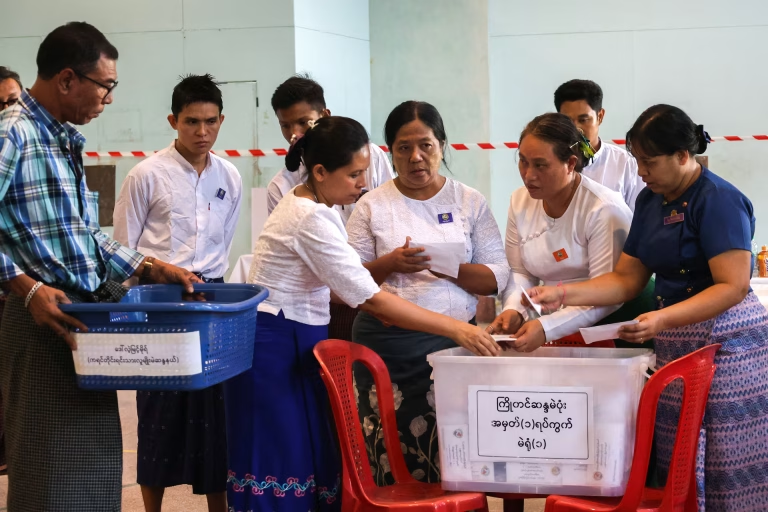
As Myanmar prepares for elections on 28 December, the UN’s top human rights official has warned that civilians are being pressured from all directions, forced by the ruling military to cast ballots while armed opposition groups threaten punishment for those who take part.

UN High Commissioner for Human Rights Volker Türk said the military-run election is unfolding amid escalating violence, intimidation and arbitrary arrests, creating conditions that make free or meaningful participation impossible.
“These elections are clearly taking place in an environment of violence and repression,” Mr Türk said. “There are no conditions for the exercise of the rights of freedom of expression, association or peaceful assembly.”
The poll marks the first electoral process since the military seized power in a 2021 coup, dissolved major political parties and jailed thousands of critics. Former State Counsellor Aung San Suu Kyi remains behind bars, alongside many other political leaders.
Since the coup, Myanmar has spiralled into widespread armed conflict, mass displacement and economic collapse. The situation deteriorated further after devastating earthquakes in March 2025, intensifying humanitarian needs nationwide.
Dissent treated as a crime
The UN Human Rights Office (OHCHR) reports that dozens of people have been detained under a newly-introduced “election protection law” simply for expressing opposition to the vote. Sentences have been severe, including terms of 42 to 49 years for three young people in Yangon’s Hlaingthaya Township who displayed anti-election posters.
Cultural figures have also been targeted. Film director Mike Tee, actor Kyaw Win Htut and comedian Ohn Daing were each sentenced to seven years in prison for “undermining public trust” after criticising a pro-election film.
Internally displaced civilians say pressure has intensified. Some have been warned their homes will be confiscated or airstrikes will continue unless they return to vote.
“Forcing displaced people to undertake unsafe and involuntary returns is a human rights violation,” Mr Türk said.
Threats from armed opposition groups
At the same time, armed groups resisting the military have issued threats of their own.
In November, nine female teachers travelling to election training in Mon State were reportedly abducted and later released with warnings not to participate. In Yangon, a group calling itself the “Yangon Army” claimed responsibility for bombing local administration offices involved in election preparations, injuring staff and vowing further attacks.
Fears over surveillance and e-voting
The UN has also expressed concern over the military’s push for electronic-only voting alongside expanded surveillance using artificial intelligence and biometric tracking. Rights officials warn the measures could further erode public trust and entrench repression.
With civilians caught between the military’s coercion and opposition threats, the UN says the election risks becoming a performance of democracy rather than an authentic expression of public will.