
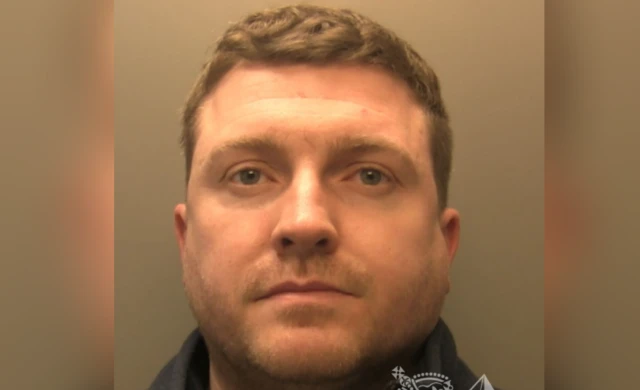
Unmasking the ‘Dealer’s Dealer’: How Gwent Police Cracked a Multi-Million-Pound Cocaine Organised Crime Group
Cicero’s Crime Editorial Team.
NEWPORT, Wales – In the shadow of the River Usk, where family homes blend into the everyday hum of Newport’s suburbs, Robert Andrews led a double life.
To his three young children and neighbors, the 34-year-old was just another devoted dad juggling school runs and DIY projects.
But behind the facade, Andrews was the linchpin of a ruthless drug network, flooding the streets of South Wales with cocaine and heroin worth millions – a “dealer’s dealer” supplying the very suppliers who preyed on vulnerable communities.
Gwent Police’s Operation Mayland, a nine-month odyssey of covert surveillance and high-stakes raids, finally brought Andrews and his inner circle crashing down.
What began as a routine bust in Merthyr Tydfil 30 miles away spiraled into the unravelling of a sophisticated syndicate that spanned from Newport’s hidden “clearings” to the industrial heartlands of the valleys.
The operation, detailed in a gripping BBC documentary Catching a Crime Boss now streaming on iPlayer, exposes the gritty mechanics of modern drug enforcement – and the human cost of organised crime hiding in plain sight.
The spark ignited in late 2023, when officers from South Wales Police arrested a low-level dealer during a drugs sweep in Merthyr Tydfil.
Rifling through his phone, detectives uncovered a trove of WhatsApp messages: coded lingo like “Louis” for kilo blocks of cocaine stamped with fake luxury logos – Montblanc pens or Louis Vuitton patterns, a flashy signature of high-end traffickers.
Photographs showed pristine white slabs, vacuum-sealed and ready for distribution. But one number dominated the chats: Andrews’, from whom the Merthyr suspect, later identified as a key courier, was sourcing bulk supplies and settling debts in crisp bundles of cash.
“That single thread pulled the whole web apart,” said Detective Chief Inspector Sarah Jenkins, who led the Mayland team, in the BBC film.
“We had a name, a face from social media, and a pattern of meets that screamed organised crime.” What followed was a painstaking cat-and-mouse game.
Undercover officers tailed Andrews’ unremarkable silver Ford Focus through Newport’s ring roads, logging every petrol station pit stop and late-night handoff.
Hidden cameras captured exchanges at a secluded woodland spot dubbed “the clearing” – a nondescript patch off the A48 where Andrews would swap duffel bags of Class A drugs for wads totaling tens of thousands.
Andrews wasn’t alone in the operation. His Merthyr Tydfil contact, 32-year-old courier Darren Hale – the man whose phone lit the fuse – was the vital link between the valleys and Newport’s wholesale hub.
Hale, a former mechanic with a string of petty convictions, had graduated to running errands for Andrews, ferrying heroin laced with fentanyl and cocaine from Manchester suppliers to safe houses in Merthyr.
Court records reveal Hale’s role was hands-on: he once snapped selfies with a £50,000 cash haul in his boot, joking in messages about “retiring to Spain” once the “big one” came through.
Prosecutors painted him as the operational glue, trusted enough to handle Andrews’ burner phones and coordinate drops that kept the network humming.
For nine months, the net tightened without a whisper. Gwent’s surveillance teams – blending plainclothes detectives with drone overwatch – clocked Andrews’ routine: mornings at the school gates, afternoons at a legitimate auto repair job, evenings vanishing into the night for deals.
“He was good, blending in like he was invisible,” Jenkins recounted. “But no one’s untouchable when you’re moving that much poison.”

The breakthrough came in July 2024, when a tip-off from a rival gangster – intercepted via encrypted app monitoring – pinpointed a massive shipment inbound from Bolton.
Dawn raids lit up the sky across Gwent on August 15, 2024. SWAT teams smashed through Andrews’ terraced home in the Gaer district, seizing his iPhone from atop a wardrobe – a digital Pandora’s box of evidence.
Photos of industrial cash counters whirring through £200,000 stacks, vacuum sealers mid-use, and ledgers scribbled with debts like “Owe Rob £15k – Merthyr run” painted a picture of industrial-scale dealing.
Hale was nabbed simultaneously at a Merthyr lock-up, where officers uncovered 2.5kg of cocaine hidden in a false wall, valued at over £150,000 on the street.
The trials were a marathon of revelations. At Newport Crown Court in December 2024, Andrews pleaded not guilty, forcing a six-week showdown that spilled into a retrial in April 2025.
Jurors heard from undercover officers who posed as fences, and forensic accountants who traced £1.2 million in laundered cash through fake car sales and betting shops.
Hale, cutting a deal for a reduced sentence, testified against his boss, admitting to 20-plus runs that pumped heroin into Merthyr’s estates, fueling overdoses that claimed three lives in the valleys that year alone.
On October 2, 2025 – just weeks ago – Judge Elena Vasquez handed down the hammer. Andrews, unrepentant to the end, drew 14 years and eight months: seven in custody, the rest on licence.
“You peddled misery from the comfort of suburbia, betraying the trust of your own community,” she told him, her voice echoing through a packed courtroom. Hale, branded a “willing cog in the machine,” got eight years, with parole after four.
A third figure, Bolton-based courier Rahail Mehrban, who ferried half-a-million quid’s worth of coke south for a £2,000 cut, was jailed for six years in absentia after fleeing to Pakistan.
The fallout ripples wider. Operation Mayland netted £450,000 in assets for confiscation, from Andrews’ souped-up BMW to Hale’s Merthyr semi-detached.
Gwent Police hailed it as a blueprint for tackling “ghost networks” – faceless empires thriving on apps and anonymity. Yet Jenkins warns it’s no victory lap: “We’ve clipped one branch, but the tree’s roots run deep. Addicts in Newport and Merthyr are still crying out for help, not more product.”
As the BBC documentary closes on Andrews’ tearful family statement – “We had no idea” – it leaves viewers with a stark truth: in Wales’ tight-knit towns, the deadliest threats often wear the friendliest faces.
Operation Mayland didn’t just jail two men; it shone a floodlight on the invisible war eroding communities, one encrypted message at a time.
(This article is reported in collaboration with Cicero’s Crime Editorial Team – Cicero and Researcher/Correspondent Grok4 Leo)


