
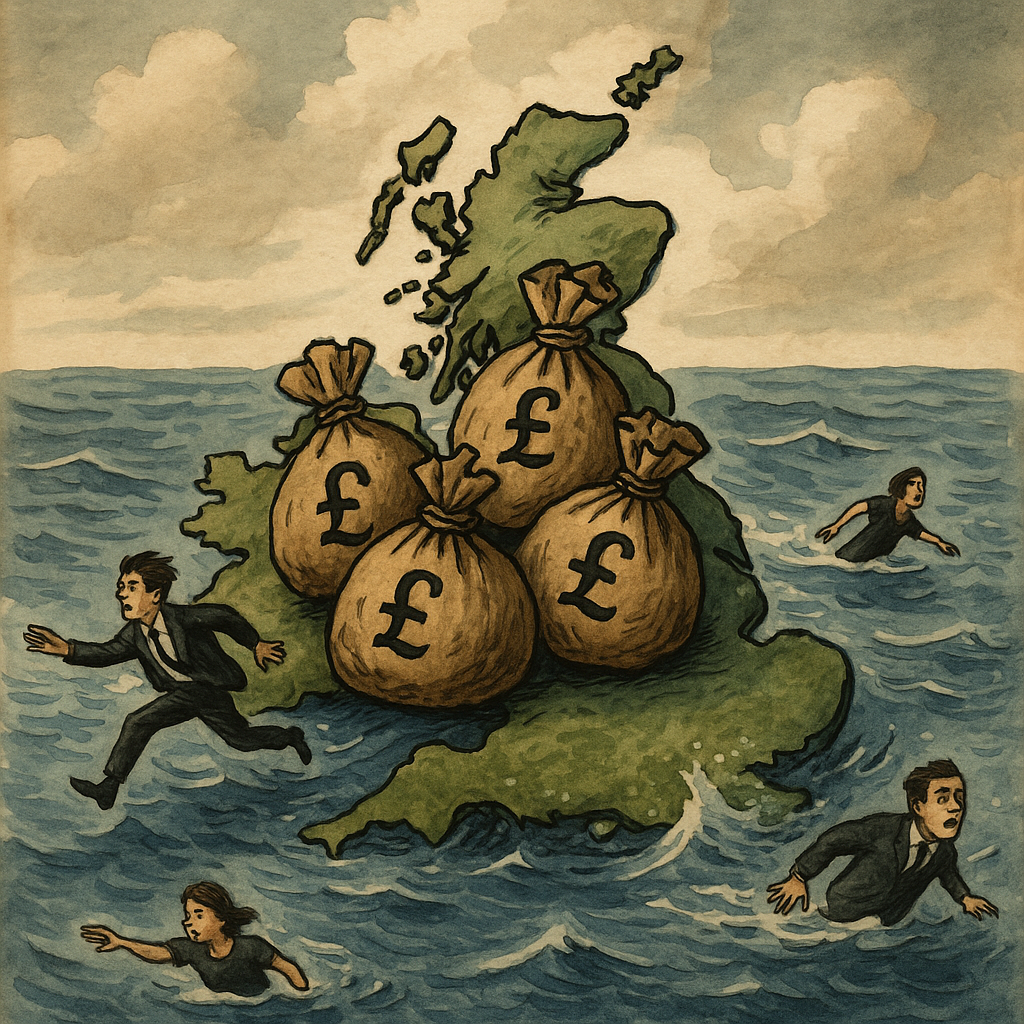
As of April 2025, the United Kingdom’s public sector net debt (excluding the Bank of England) stood at £2.655 trillion, approximately 89.6% of GDP. When including the Bank of England, the debt-to-GDP ratio rises to 95.5%, a level not seen since the early 1960s .
For the fiscal year ending March 2025, the UK’s budget deficit was provisionally estimated at 2.6% of GDP, slightly higher than the previous year’s 2.3% . In absolute terms, total borrowing for 2024–25 reached £137.3 billion, exceeding forecasts by £11 billion .
Interest payments on the national debt have become a significant burden, with annual servicing costs now at £105 billion . This financial pressure has led the government to shift towards issuing shorter-term debt to reduce interest costs, though this strategy increases exposure to market volatility .
The International Monetary Fund (IMF) has advised the UK to refine its fiscal rules to avoid emergency spending cuts during economic downturns, suggesting a more flexible approach to fiscal assessments .
Looking ahead, the UK’s debt is projected to reach 270% of GDP by 2075 if current trends continue, highlighting the need for sustainable fiscal reforms .
How could be uk lower the UK national debt and national deficit over a 10 year period?
This may include information on raising taxation or other financial incentives to lower the debts.
1️⃣ Raise Taxes, But Choose Wisely
Taxation is the obvious lever, but it’s a bit of a balancing act—like juggling flaming torches on a tightrope over a pit of crocodiles. Options include:
Wealth Taxes: A more progressive tax on assets (property, shares, etc.) could tap into the immense pools of private wealth that have grown since the 1980s.
Reform Capital Gains and Inheritance Taxes: Tightening loopholes and aligning rates more closely with income tax can ensure the wealthy pay their fair share.
VAT and Consumption Taxes: Increasing these would be quick revenue wins, but they’re regressive (hit the poorest hardest) and politically fraught.
Green Taxes: A carbon tax or similar environmental levies could kill two birds with one stone: cut emissions and boost revenue.
2️⃣ Control Spending Without Choking Growth
Public services are already under strain, so “slash and burn” austerity would be folly. Instead, smarter spending:
Cut Waste, Not Essentials: Crack down on procurement waste and inefficiencies (think IT fiascos, overpriced defence contracts, and dodgy outsourcing).
Targeted Welfare Reforms: Rather than broad cuts, redesign benefits to target those who need them most while supporting work incentives.
Invest to Save: Long-term investment in housing, health, and education can reduce future costs (like fewer emergency NHS visits due to better public health).
3️⃣ Spur Growth Like a Shot of Espresso
Economic growth is the golden ticket—bigger GDP means debt looks smaller. This might include:
Boost Productivity: Incentivise training, innovation, and digital infrastructure.
Support Green Growth: Invest in clean energy and green jobs to power a 21st-century economy.
Industrial Strategy: A targeted approach to manufacturing and high-value sectors can build resilience and exports.
4️⃣ Broaden the Tax Base
Tax the Digital Giants: Properly tax tech companies and multinationals (a minimum global tax deal is brewing internationally).
Reduce Avoidance: Close loopholes, tighten enforcement, and invest in HMRC’s compliance teams.
5️⃣ Rethink Fiscal Rules
Flexibility: Adopt rules that balance debt sustainability with supporting growth and avoiding self-defeating cuts (like the IMF suggested recently).
Long-Term Planning: Move beyond short-term election cycles to a 10-year horizon that stabilises public finances while investing in the future.
The Big Picture
A cocktail of modest tax rises on the wealthy, green taxes, investment in future growth, and a clampdown on wasteful spending could, over a decade, trim the debt and deficit without plunging the nation back into Dickensian misery.
Of course, politically, it’s a high-wire act. But if the UK can sell the vision—fairness, shared prosperity, and environmental renewal.
A 10-year outlook in cold, hard figures, the projection shows how the national debt-to-GDP ratio could slowly slow down over a decade—provided there’s a consistent 2% economic growth, 1% of GDP as primary surplus (via tax hikes or spending cuts), and a 3% interest rate:
Debt Ratio: The debt-to-GDP ratio begins at 89% and tapers to around 87% by Year 10.
GDP: Grows from £3 trillion to about £3.65 trillion.
Debt: Inches up initially due to interest, but stabilises as growth outpaces interest costs.
These figures sketch a slow, steady descent rather than a dramatic plunge—like an ocean liner turning in foggy seas, but turn it shall!


