
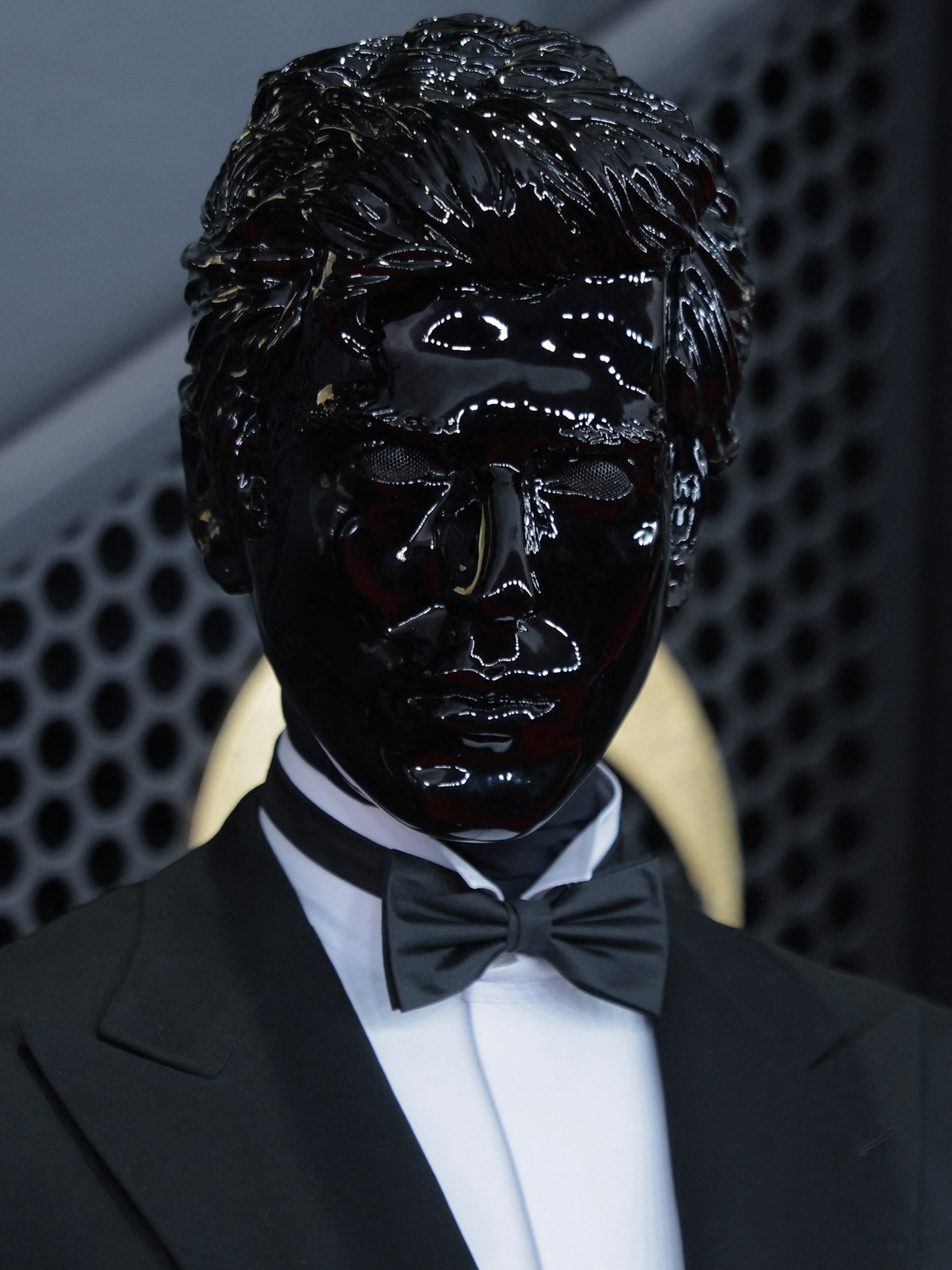
Gesaffelstein emerged as one of the most talked-about figures at the 2026 Grammy Awards, his presence as arresting as the accolade itself.
The French producer’s appearance on the red carpet, concealed behind a severe, sculptural mask, reignited public fascination with an artist long known for cultivating mystery as carefully as sound.
The mask, widely believed to have been created by Ironhead Studio, a specialist in high-end creature and character design for film, echoed the stark visual language that has followed Gesaffelstein throughout his career. The choice felt deliberate rather than theatrical: a reminder that for Lévy, presentation and production are inseparable.

That evening, Gesaffelstein collected the Grammy Award for Best Remixed Recording, Non-Classical for his reworking of Abracadabra, originally released on Mayhem, the 2025 album by Lady Gaga.
Beyond the remix, Lévy co-wrote and co-produced much of the album and also appears on the track Killah, a collaboration Gaga has repeatedly singled out as one of the project’s creative cornerstones.

Born Mike Lévy in Lyon, Gesaffelstein began releasing music in 2008 before establishing his own record label the following year.
His stage name fuses the German term Gesamtkunstwerk meaning “total artwork” with a nod to Albert Einstein, an apt description for an artist who treats sound, image and persona as a single unified statement.
Often labelled the “Dark Prince of Techno”, Gesaffelstein’s influence stretches well beyond electronic music’s borders. His collaborations include work with Kanye West on Yeezus, The Weeknd on My Dear Melancholy, as well as projects with Pharrell Williams and Charli XCX.
As a solo artist, he has released three studio albums: Aleph (2013), Hyperion (2019), and Gamma (2024), while also composing the score for the 2015 French film Disorder.
The Grammy win has not transformed Gesaffelstein’s career so much as reframed it for a wider audience.
Long admired for his meticulous production and uncompromising aesthetic, Lévy now finds himself newly visible, proof that anonymity and acclaim can coexist and, in his case, amplify one another.


